


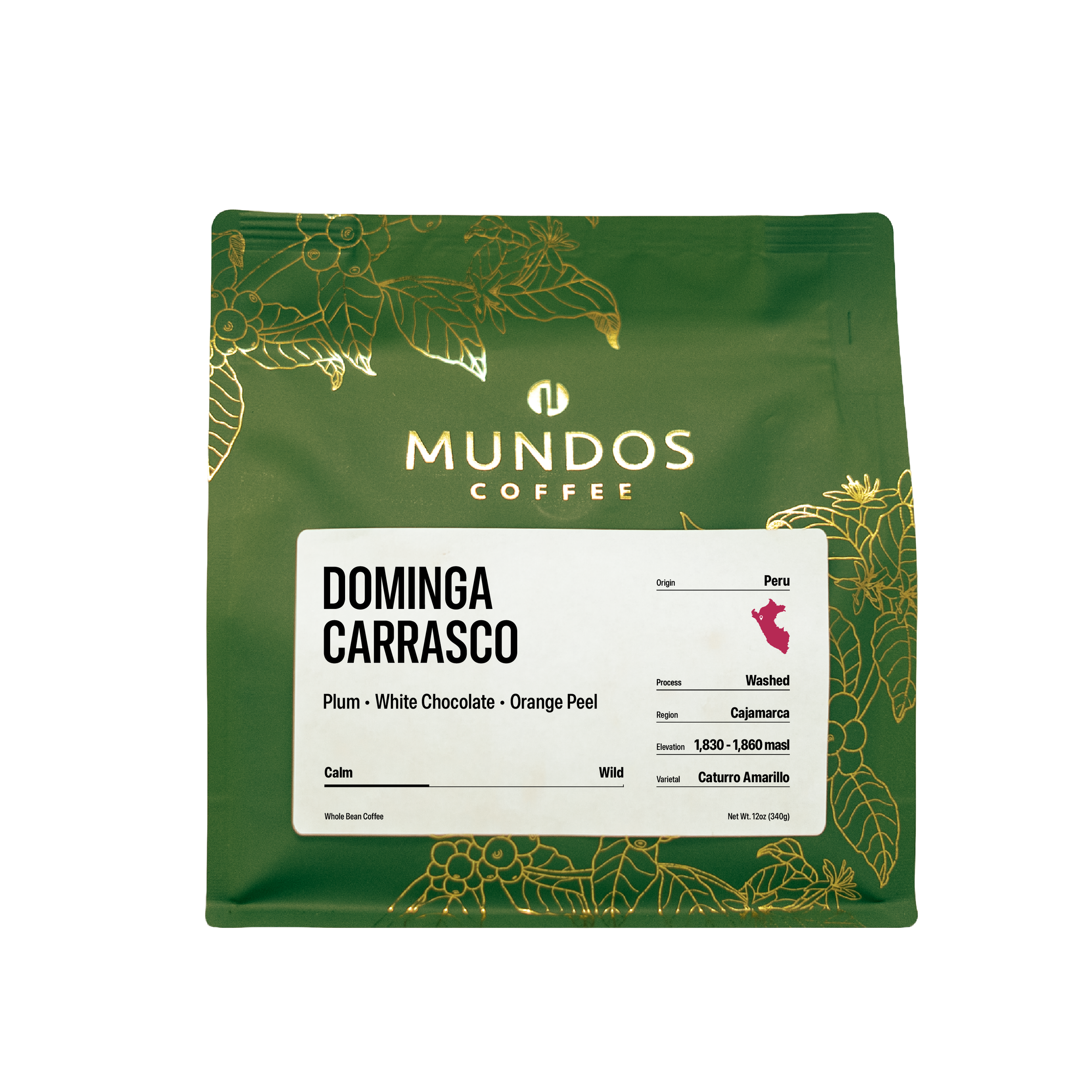
Whole Bean Coffee
[PUH-ROO • DOH-MIN-GAH • KUH-RHASS-KOH]
Process: Washed
Plum, White Chocolate, Orange Peel
Rich and sweet with notes of White Chocolate and Orange Peel.
At 1830–1860 masl, Dominga Carrasco tends her farm with steady confidence and open curiosity. Married to Amado Flores (uncle of David Flores), Dominga represents an older generation of growers still committed to learning from the next. She has specifically been instrumental in championing Caturro Amarillo—a fragile but rewarding variety that she preserves through careful, hands-on management, and that has influenced many of her neighbors to keep it in their fields as well.
El Morito, originally a family operation passed down over generations, formalized as a producers’ association in 2022. Dominga’s role within the group reflects its founding ethos: resilience, transparency, and knowledge-sharing across generations. She processes her coffee on-farm and contributes to a collective effort grounded in individual autonomy.

Whole Bean Coffee
[PUH-ROO • SAN • IG-NAH-SEE-OH]
Process: Washed
Almond, Chocolate, Stone Fruit
Grown in the tropical highland of Cajamarca, this coffee is made of many smallholder farmers growing rich fertile soil.
Very smooth mouthfeel with notes of almond and the sweetness of stone fruit.
Cajamarca is a semi-dry, semi-cold, tropical highland of Peru with very fertile soil at high Andean mountain elevations. All of these factors contribute to the potential of specialty coffee production in the area, which is growing. Smallholder producers farm on 2-3 hectares of land, many of which practice organic farming. Most farmers in the area work independently, but the recent increase in cooperatives has been effective in increasing the quality of coffees produced in the area.

12 oz bag of whole bean coffee
Process: Washed
cherry pie, cinnamon, milk chocolate
Tingo Maria is located in north-central Peru in the province of Leoncio Prado, department of Huanuco, district of Rupa-Rupa. It is in an upper jungle area, which is why the locals have nicknamed it the "Gateway to the Peruvian Amazon." After many years of fighting narcotrafficking in the Huanuco province, with many government projects and international aid, coffee farming is becoming one of the main economic activities in Tingo Maria, helping thousands of families come out of the narcotrafficking chain.

12 oz bag of whole bean coffee
Process: Washed
apple, cinnamon, cocoa
This lot features selections from Bajo Kimariato, outside the city of Quillabamba in the Cusco region, coming from two smallholder farms: Fortunato Alamanacin's San Rafael and Exaltacion Fuentes's Balconniyoc.
Peru is made up of a wide variety of landscapes, from long beaches to high mountains, from the desert to the largest rain forest. In the north, the second highest mountain rage, the Andes, goes through Cajamarca department and converges with the Amazon, creating complex and diverse orographies and microclimates. Cajamarca’s inter-Andean valleys have hosted coffee crops for more than 200 years and concentrate almost 43% of the total Peruvian coffee production, not only because of its vast lands but because of an ancient coffee tradition that goes back to the XVIII century, when the first coffee crops were brought in and started to be nurtured by the many generations of producers in the region. Coffee has been part of their lives for so long that their inhabitants’ experiences and learnings are inextricably linked to it.
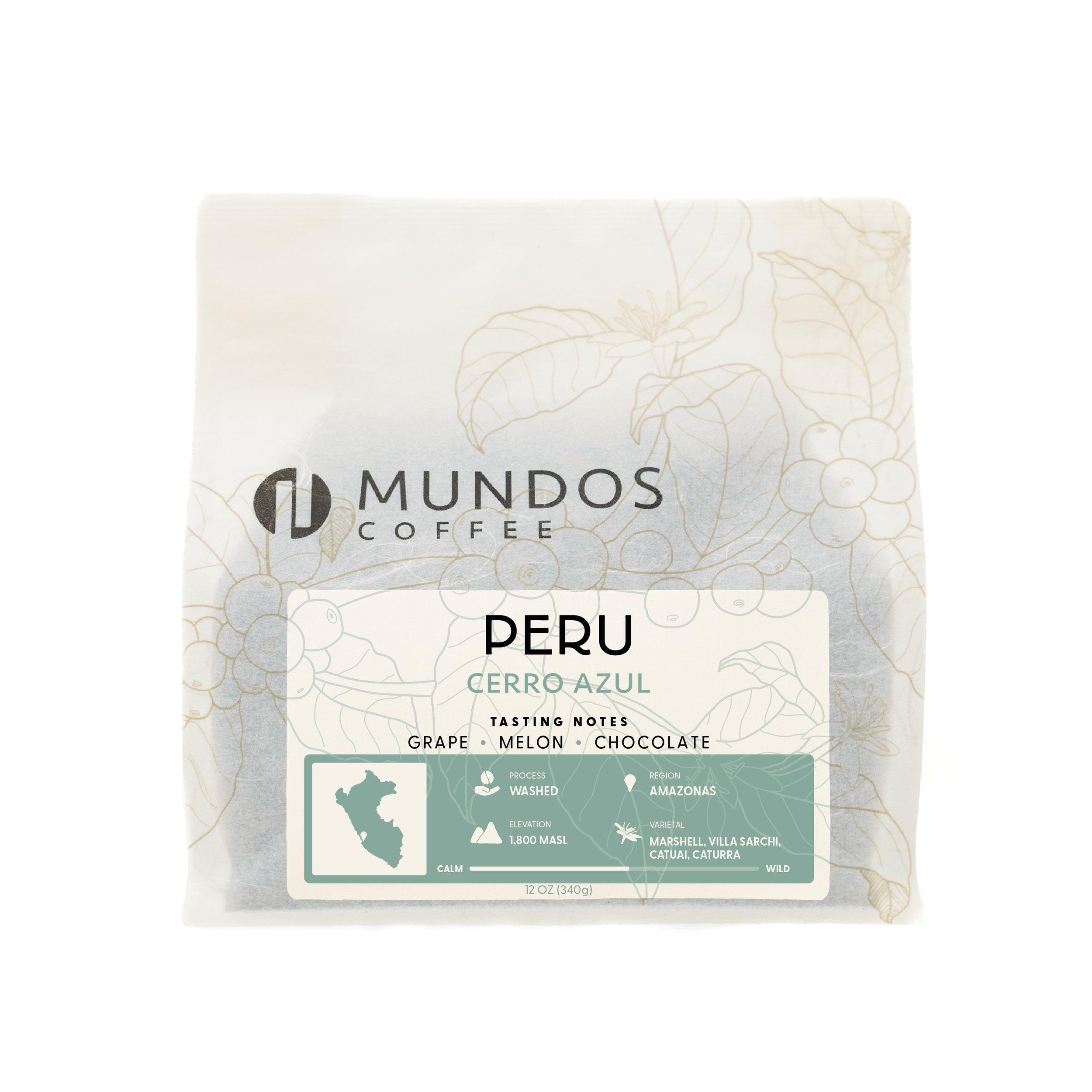
Whole Bean Coffee
[PUH-ROO • SER-UH • AH-SOOL]
Process: Washed
Grape, Melon, Chocolate
Enjoy this smooth and sweet coffee from Cerro Azul, you’ll find notes of melon and chocolate.
The Norcafé cooperative was formed in 2015 by a group of university students from coffee producing families with a goal to promote continuous improvement of quality and to create opportunities for smallholder coffee growers. The co-op began with 100 member families, and has since grown to include 334 men and 145 women producers working on nearly 1200 hectares of land throughout the Amazonas and Cajamarca coffee regions. Member producers have already shown great dedication and skill in producing high quality lots, which is also demonstrated with four individual member producers earning a place in Peru’s Cup of Excellence between 2018 and 2020.
This certified Organic Cerro Azul underwent Washed processing. Cherries were handpicked to ensure ripeness before being pulped on the day of harvest. The pulped coffee was fermented for 48 hours before being washed. The washed coffee was dried for approximately 16 days in solar dryers.
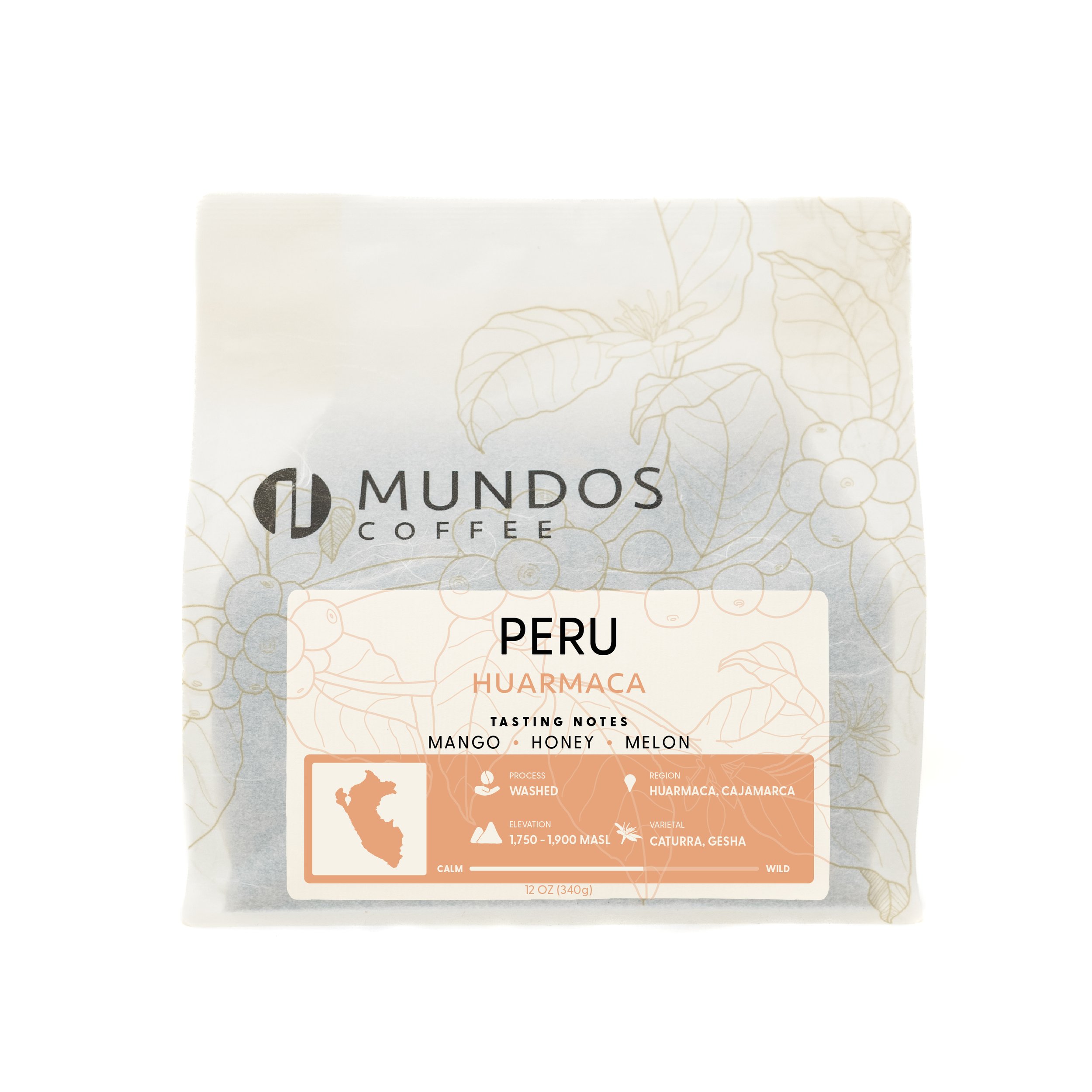
Whole Bean Coffee
[PUH-ROO • WAHR-MAK-AH]
Process: Washed
Mango, Honey, Melon
Grown in Huarmaca, Cajamarca this crop is from 5 smallholder farmers, each contributing their expertise to produce exceptional coffee.
Melon sweetness with a tart mango and honey finish.
This lot features the contributions of five smallholder farmers located in Huarmaca, each contributing their expertise to produce exceptional coffee. Located in Peru’s northern highlands, Huarmaca offers ideal conditions for growing high-quality Arabica varieties like Caturra and Typica. The region’s high altitudes and cool climate contribute to the coffee’s vibrant acidity and unique flavor profiles. Prominent among this group of farmers is Yony Quispe, a former chef from Lima who turned to coffee farming during the pandemic. Yony’s culinary background is evident in his meticulous approach to coffee production.
On his farm, Yony hand-picks coffee cherries at peak ripeness and uses the flotation method to select only the best. The cherries are pulped with a motorized machine and fermented for 24 to 36 hours, depending on the temperature. Yony carefully monitors the fermentation process to ensure the desired flavor profile. The beans are then dried in solar dryer, where Yony oversees the drying time to maintain quality. Yony’s commitment to sustainability sets his farm apart. He integrates shade trees and additional crops like citrus fruits, creating a diverse ecosystem that benefits the coffee plants. He uses living barriers to promote biodiversity and protect the soil, avoiding herbicides.
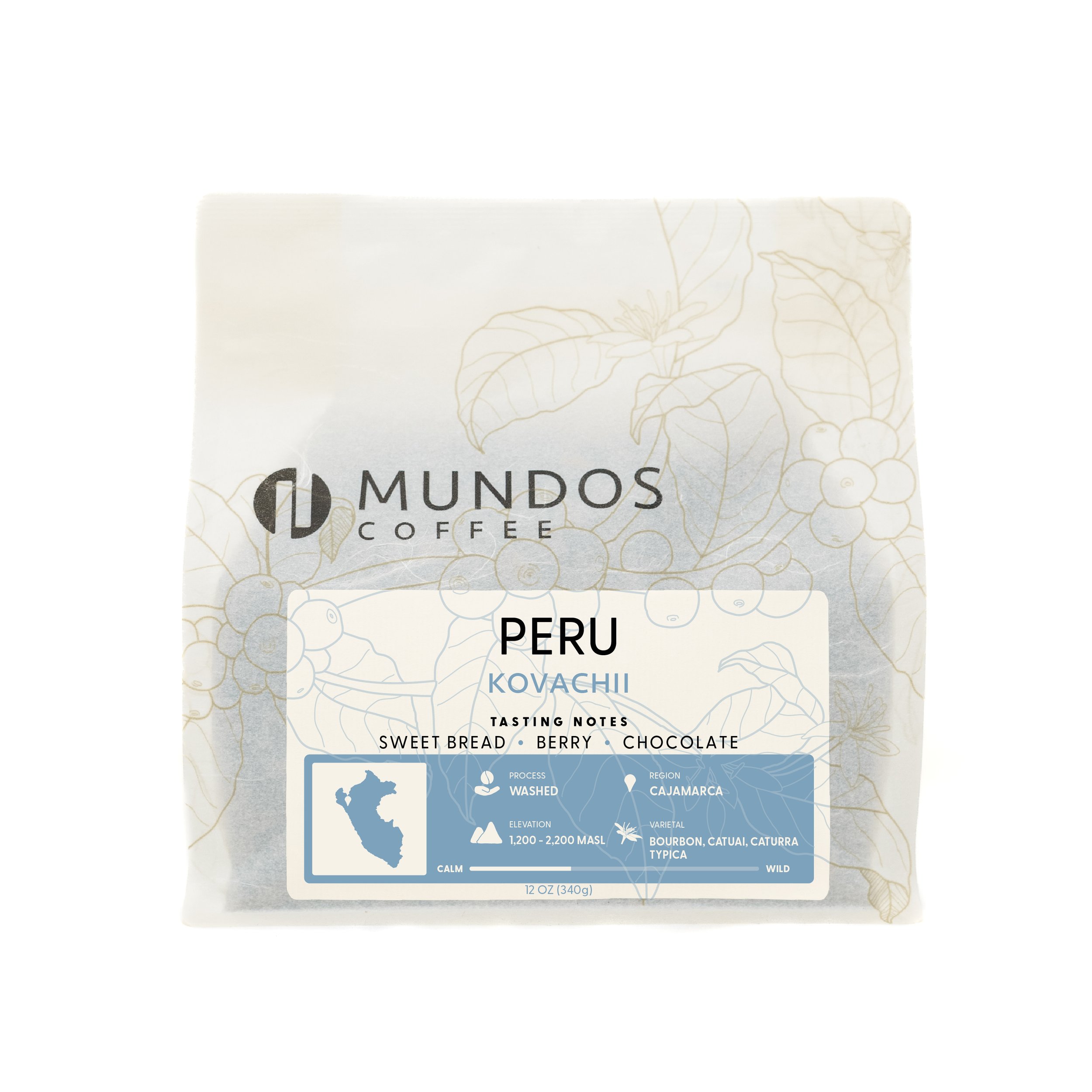
Whole Bean Coffee
[PUH-ROO • KOH-VA-CHEE]
Process: Washed
Sweet Bread, Berry, Chocolate
Sourced from many smallholder farmers in Cajamarca, Peru.
Smooth and dependable. This washed process Peru has a cozy mouthfeel with notes of sweet bread and chocolate, underlying berry sweetness.
Most of the coffee produced in Peru is processed by hand on the producer's farm, and Kovachii is no different. Cherries are harvested, de-pulped, processed and then dried either on patios, drying beds, or on tarps. Farmers from all over Cajamarca bring their finished parchment to either a main warehouse in Jaen or to local buying stations in their communities for evaluation. Samples are taken, the green is evaluated, and the coffee is tasted -- then a price is agreed upon and the coffee is moved into storage. To create Kovachii, the highest-quality selections from these lots collected from smallholders are combined, milled, and prepared for export.
Whole Bean Coffee
[DEE-KAFF • PUH-ROO]
Process: Washed - Swiss Water Process Decaf
Apple Sauce, Banana Bread, Roasted Almonds
Smooth and sweet, perfect cup to go with your dessert after supper. Low acid.