

SINGLE ORIGIN COFFEE BEANS
Single origin coffee beans from across the globe.
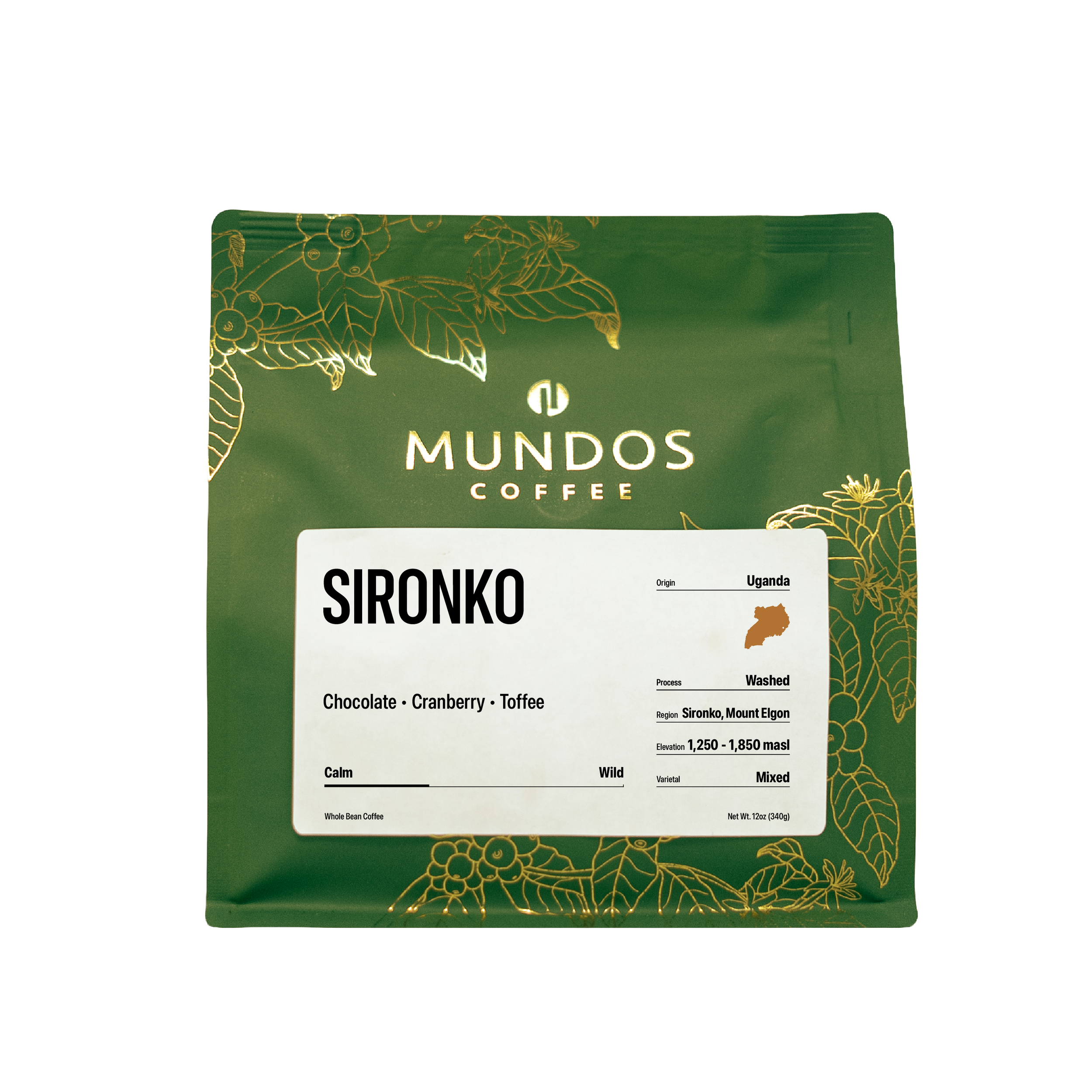
Whole Bean Coffee
[YU-GONE-DUH • SEE-RON-KOH]
Process: Washed
Light body offering from Sironko station, with notes of toffee and cranberry.
At 1250 masl, the Sironko Coffee washing station sits in a unique location to accommodate arrivals from higher altitude farms up to 1850m along the slopes of Mt Elgon. Mt Elgon is an extinct volcano on the border with Kenya and is thought to be the oldest volcano on the African continent. The massive base and gentle slopes support thousands of smallholder farmers, with arabica coffee is cultivated across a broad band around the mountain between 1,200 and 2,200masl. Volcanic soils, plentiful rain, high altitude and abundant sunshine are all contributing factors to the excellent terroir of the Mt Elgon region and the subsequent exceptional cup quality.
Selectively hand-picked cherries arrive at Sironko Washing Station where they are subjected to quality and weight tests. Automatic floatation separates the cherries by density into 3 quality grades, with the densest cherries representing the highest quality. The selected cherries are then mechanically depulped and demucilaged. Farmers are trained to decompose the discarded pulp and use as composite fertilizer, while waste water is treated on site and used for plantain crops and demo-farms in the local area. The wet parchment is then mechanically dried. A variety of drying chambers and carefully regulated temperatures help maintain the quality of the coffee throughout this process. The first chamber consists of water drainage (skin drying) and lasts approximately 7 hours. This helps to eliminate any chance of quality deterioration associated with traditional fermentation & sun-drying. It takes between 21 and 48 hours total to dry the wet parchment to recommended moisture level of 12%.
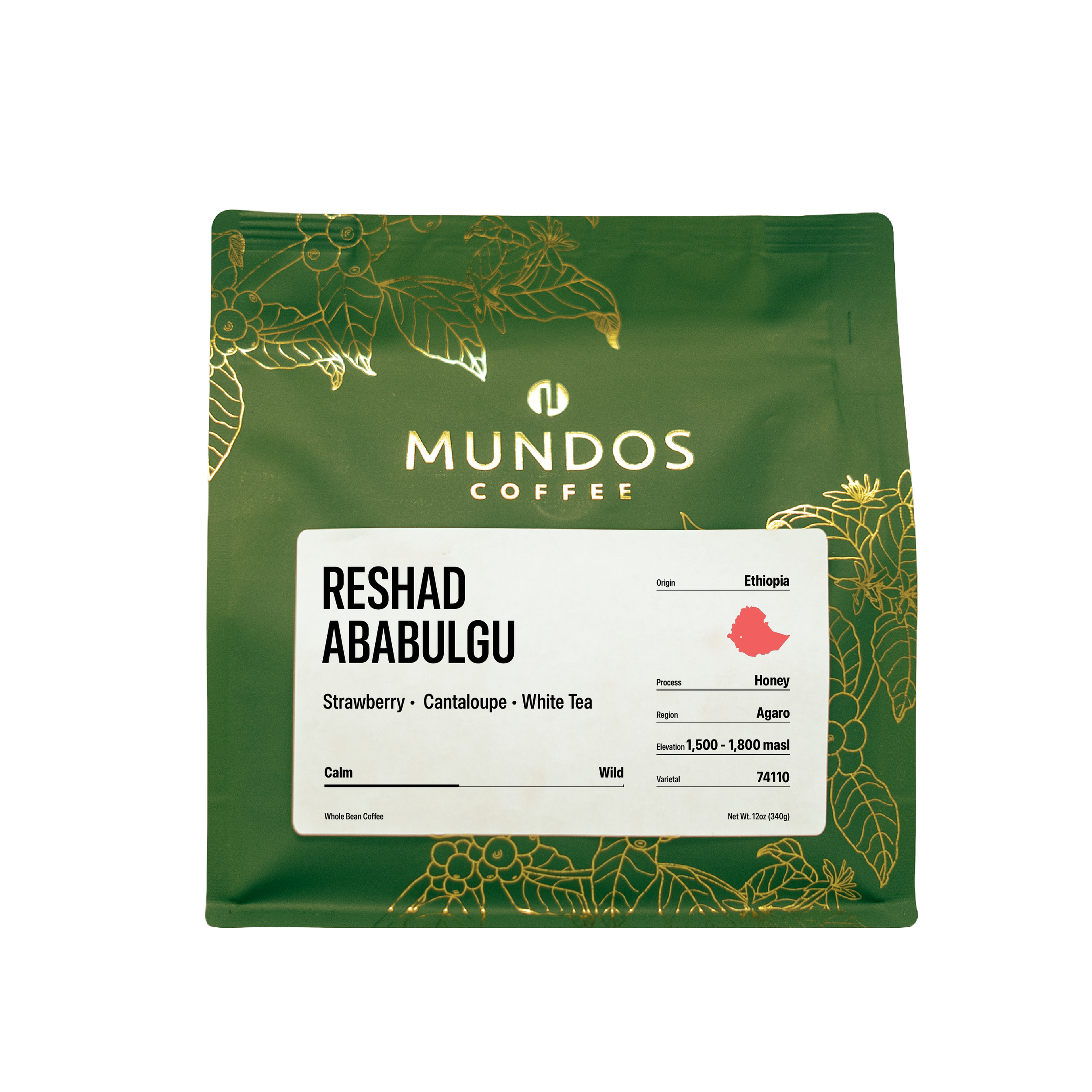
Whole Bean Coffee
[EETH-EE-OPE-YA • RUH-SHODD • OBBA-BOWL-GOO]
Process: Honey
Rich strawberry sweetness, with notes of white tea and cantaloupe
Reshad Ababulgu is one of several smallholder farmers near the Biftu Gudina co-op who, after years of selling cherry into the orbit of cooperatives like Duromina, are beginning to step into direct export themselves. With drying materials, outside support, and export licenses now in place, producers like Reshad—and others in his community, including Mustefa Abasadi and Abo Hussein—represent an important shift in Ethiopia’s coffee landscape: highly capable farmers with proven quality track records gaining more control over how their coffee is marketed and sold.
A second-generation coffee farmer, Reshad works land that has been in his family for roughly 60 years. His father inherited it from Reshad’s grandfather and later passed it on to him. In the early 2010’s, Reshad replanted with improved varieties and more modern farming practices. He lives less than a kilometer from the farm with his wife and three children, with coffee having now become the family’s sole livelihood.
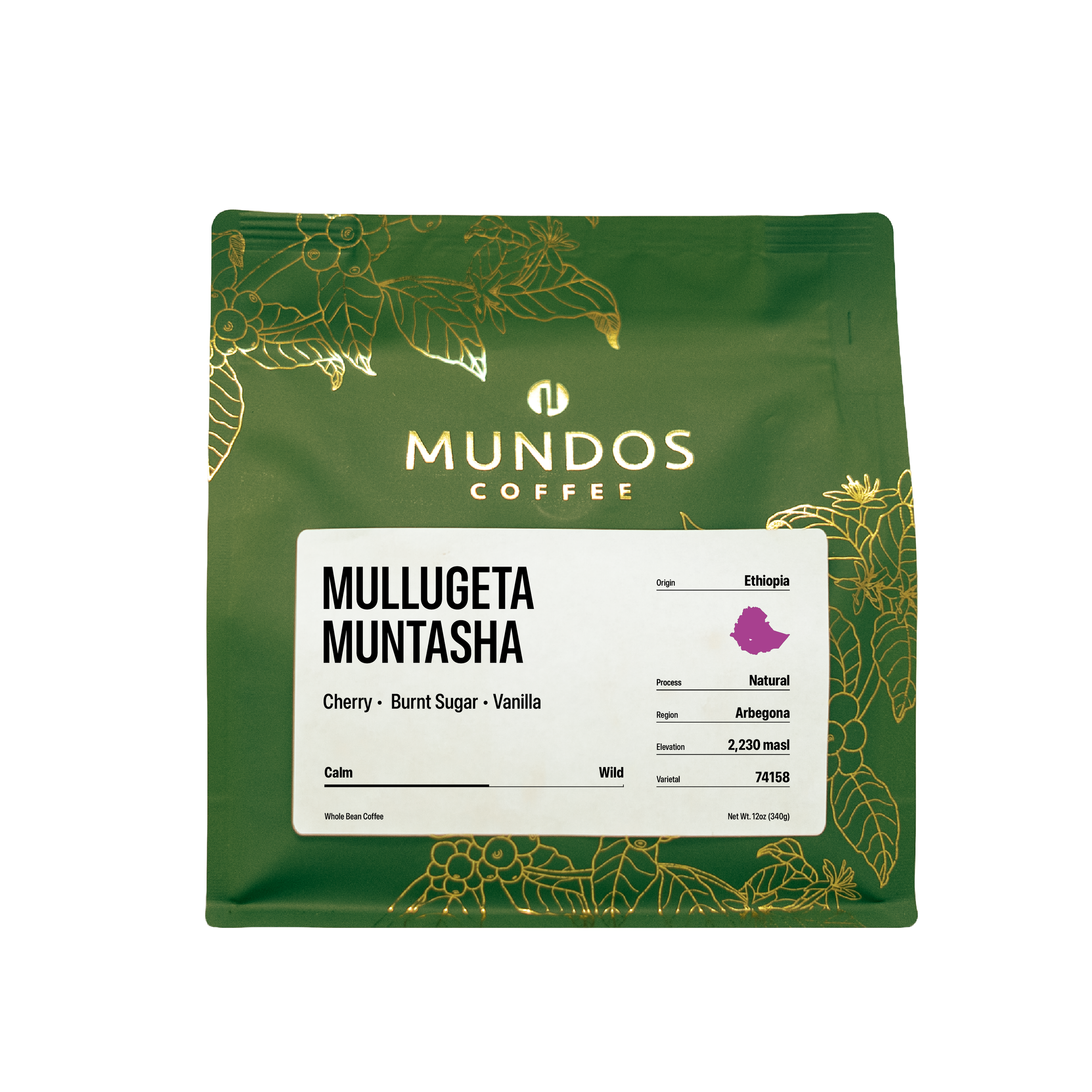
Whole Bean Coffee
[EETH-EE-OPE-YA • MOO-LOO-GEH-TAH • MOON-TAH-SAH]
Process: Natural
Rich, syrupy sweet coffee grown at 2,230 masl in Arbegona, Ethiopia, with notes of cherry and burnt sugar.
Mullugeta Muntasha grew up in Bursa, a village where coffee cultivation is still relatively new. As a young man, he worked as a truck driver in Arsi, transporting cherry to private washing stations, before later becoming a collector supplying the central market. As climate shifts made coffee more viable in Bursa, and with support from the local agricultural office, planting expanded in the area. In 2021, Mullugeta returned home and established his own drying station, Dawencho.
That very same year, he placed second in the Cup of Excellence with the Dawencho farmer group and sixth under his own name. In 2022, four of the competition’s top ten coffees were processed at Dawencho, including the first-place lot from Legesse Botola, Mullugeta’s brother-in-law. Today, the station processes coffee from Mullugeta’s own farm as well as from neighboring growers, and has become one of the clearest signs of how quickly quality has advanced in this newer coffee-producing area.
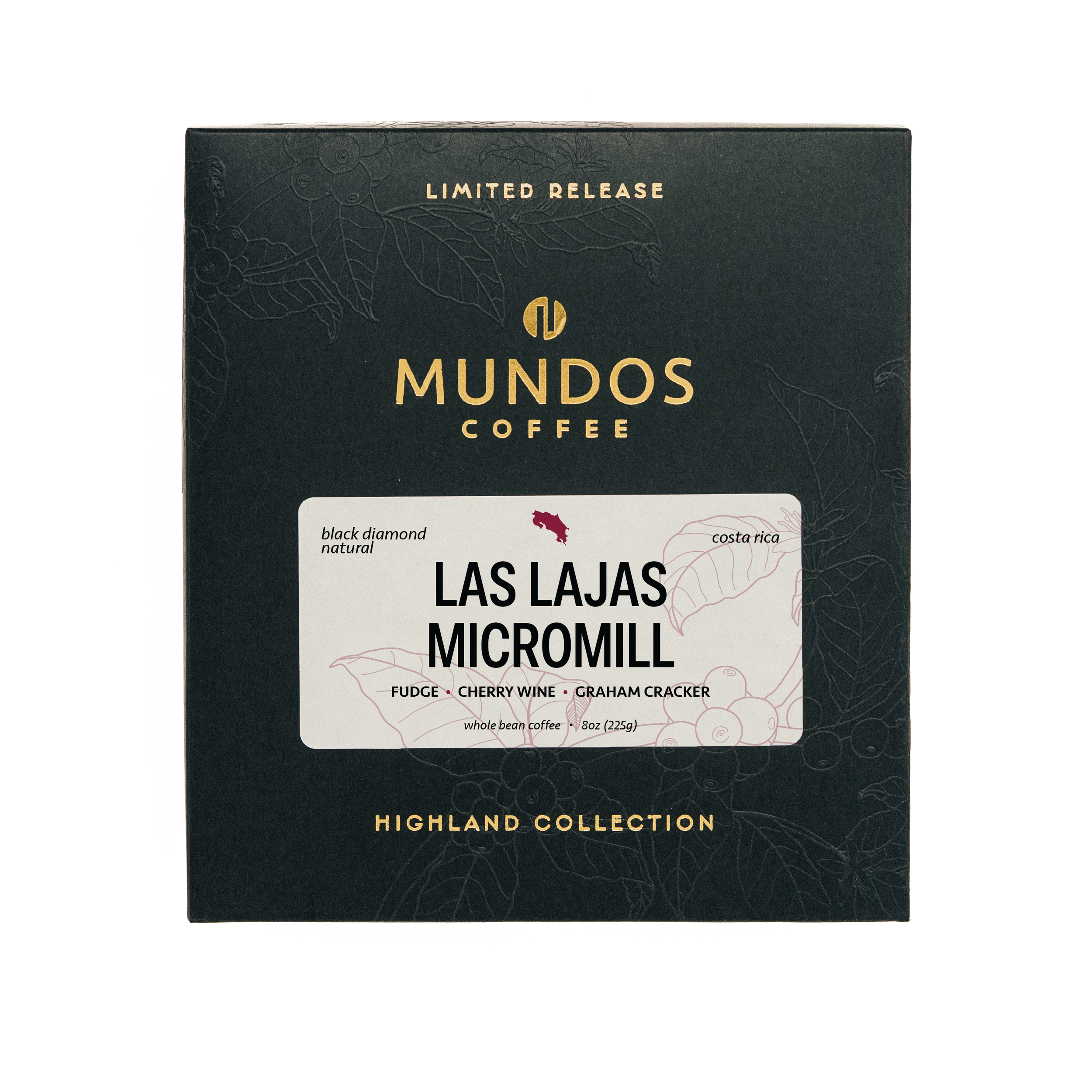
HIGHLAND COLLECTION
Whole Bean Coffee
[KOH-STUH • REE-KUH • LAS • LA-HASS • MY-KRO-MILL]
Process: Black Diamond Natural
Syrupy sweet naturally processed coffee from Las Lajas Micromill grown in Costa Rica's central valley.
Oscar and Francisca Chacón are third-generation coffee producers, but the coffee is more than just in their family heritage: It's in their hearts and souls as well. The couple is committed to quality and innovation, and are among the very first farmers in Costa Rica to produce Honey and Natural process specialty coffee.
In 2005, after years of delivering their cherry to a cooperative for the going market price, they decided to join the brand-new "micromill revolution" and buy their own depulper to have more control over the quality and the price they received for their lots. "At first, we didn't know what we were doing," Oscar explains. "We were just experimenting."
That experimentation led to some of the most exciting new flavor profiles we have ever tasted: Now, the Chacóns produce a wide range of Honey process coffees, modulating the drying time in order to create different effects in the cup.
Necessity bred more innovation for the family when an earthquake in 2008 wiped out electricity and water to their area during the harvest. Unable to run the depulpers or to wash the mucilage off to produce Washed lots, Francisca took inspiration from her knowledge of African coffee production and quickly built raised beds on the property.
Whole Bean Coffee
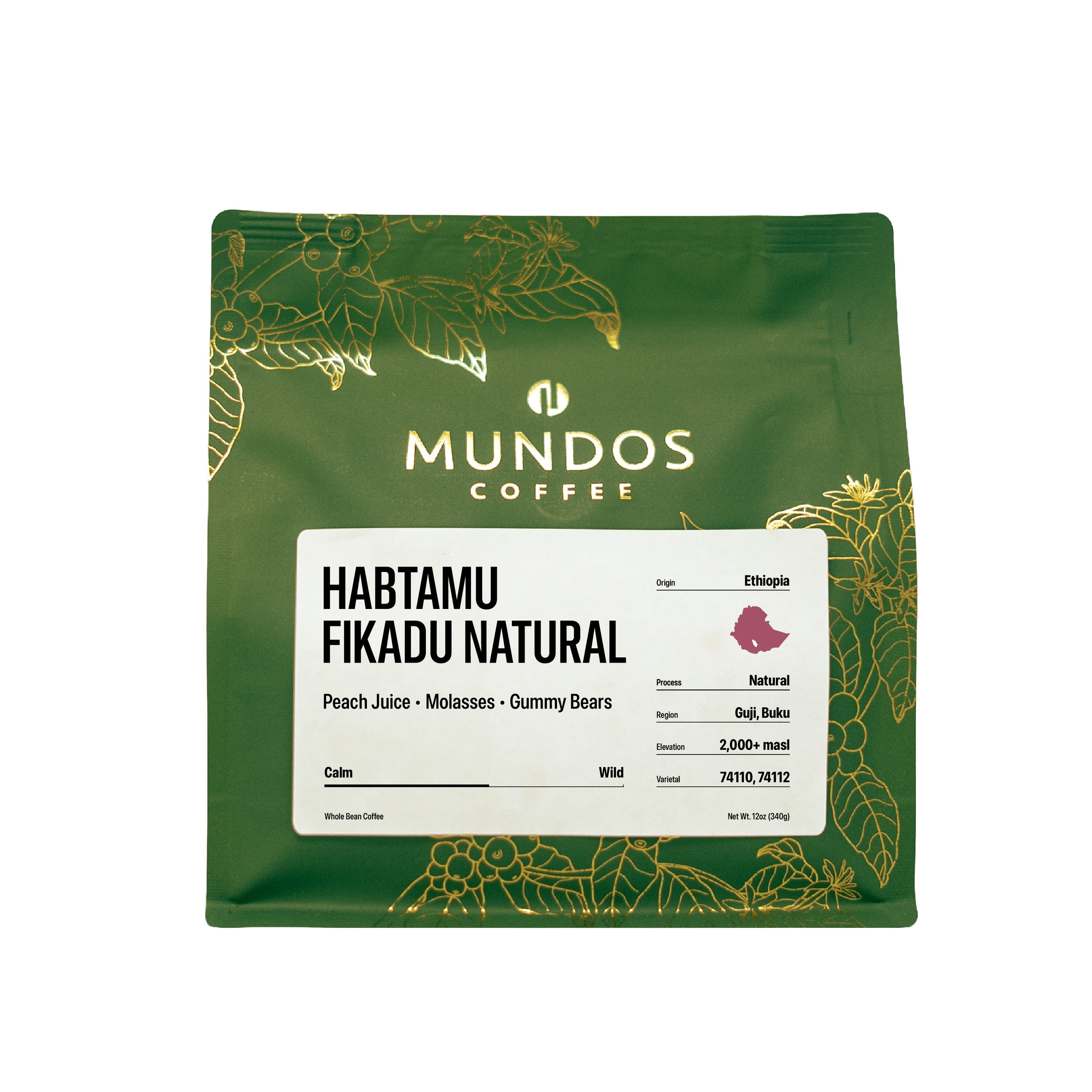
[EETH-EE-OPE-YA • HAB-TOHM-OO • FEE-KUH-DOO]
Process: Natural
Juicy and sweet naturally processed coffee with notes of gummy bears and molasses
Habtamu Fikadu Aga (trading as Kuri Mountain Coffee) was founded in 2015 by Aaga Dinsa, the grandson of a coffee farmer in Kuri Kebele. He inherited his grandfather’s farm, which remains the export-hub of the operation. Today the organization spans 105 hectares planted in Kuri Kebele, plus 837 hectares total including the farms of 144 registered outgrowers. These outgrowers deliver cherry to washing stations owned or managed by the company across Wolega, Guji, and Jimma.
At the company’s washing stations, cherries are pulped and undergo a submerged fermentation lasting 48–72 hours depending on temperature. After washing, the parchment rests in water for another 12 hours before being dried on raised beds for 10–12 days. This careful and consistent method underpins the quality across all of Habtamu’s lots.
The company is certified organic (Ecocert) and holds Fair for Life certification.
Whole Bean Coffee
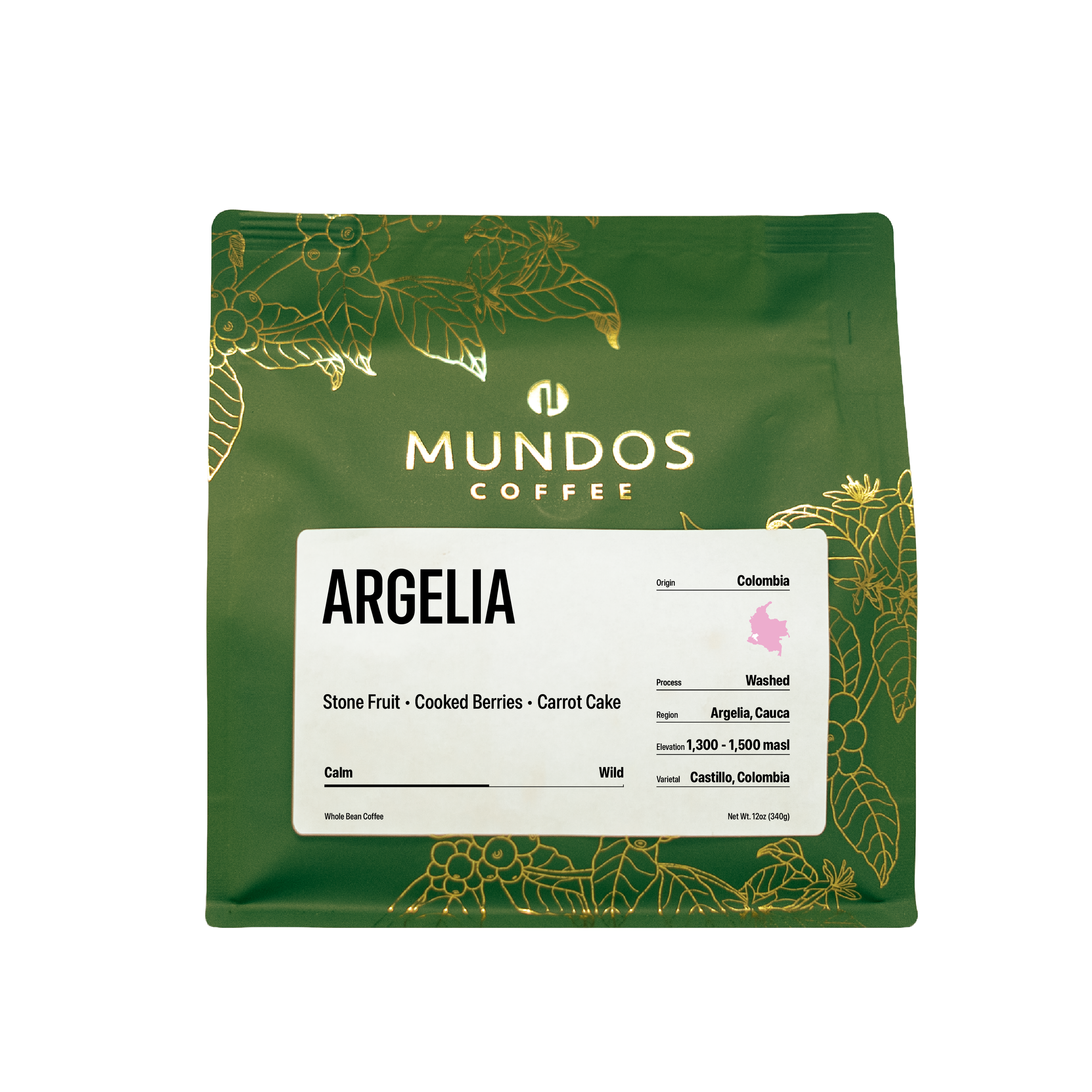
[KUH-LUM-BEE-YUH •AR-HEY-LEE-YUH]
Process: Washed
Stone Fruit, Cooked Berries, Carrot Cake
Bright and clean washed process, with tropical sweetness and a grape tartness.
ARGCAFEE (Association de Transformadores y Comercializadores de Cafe Especiales de Argelia Cauca) is an association that started in 2014 with only 17 member producers, all of whom were committed to finding a better market for their coffee than the commercial one they were delivering to—both in search of higher prices and a better showcase for the quality of their coffee. As Argelia is relatively remote, it had been hard for the small farmers in the area to reach the marketplace and have leverage in their selling. Through their work, however, the association grew to over 230 members, about 150 of whom are presently active in farming and delivering lots to the association.
The community’s history has been eclipsed by armed conflict and illicit crop production, but ARGCAFEE is reshaping this narrative through the commerce of coffee. Collectively, they are implementing sustainable production techniques through training, commercializing member coffees and fostering buyer connections, drawing youth into the industry through education at ITARG (El Instituto Tecnico Argcafee), and creating sustainable and legal pathways to prosperity through their Women Producer and Coca Substitution programs.
This lot was developed with the women producers of ARGCAFEE. 78 women contribute to this program, with another 44 communicating intentions to join. The Women Producer program is designed to identify and incentivize the many women within the coffee industry. Along with this, this coffee is also part of the Coca Substitution Program.
The Coca Substitution program is a partnership created to promote the cultivation of legal crops such as coffee in place of illicit crops like coca. The partnership operates a nursery in Argelia, Cauca, that cultivates high-yielding and coffee leaf rust-resistant varieties while providing agronomical training and assistance to members of ARGCAFEE. The substitution program also provides support by offering a guarantee of purchase at higher-than-average prices. With these premiums, farmers are encouraged to shift towards the cultivation of legal crops that offer a sustainable source of income and to decrease the community’s dependence on the narco-state in Colombia.
The program aims to address the underlying factors contributing to the cultivation of illicit crops, such as poverty, lack of education, and access to markets. By providing farmers with the necessary tools and knowledge, the program offers an alternative means of livelihood, thereby reducing the reliance on illicit crops.
Through the cultivation of specialty coffee, farmers can access formal markets and earn a higher income, improving their living standards. Additionally, the program promotes environmental sustainability by encouraging the use of sustainable agricultural practices and reducing the negative impacts associated with the cultivation of illicit crops
ARGCAFEE partnered up with Banexport in 2017, and the group now has a warehouse and a cupping lab; the lab is staffed full-time by five professionals, all of whom are young members of multigenerational coffee families who have decided to stay in the family business—a huge concern these days, as the average age of a coffee farmer is over 55. It is difficult to incentivize young people to stay in coffee production during such low prices.
The organization is democratically run, with a director, a legal representative, a producer representative, an accountant, a secretary, and technical staff, all elected in a voting process conducted by the members.
Whole Bean Coffee
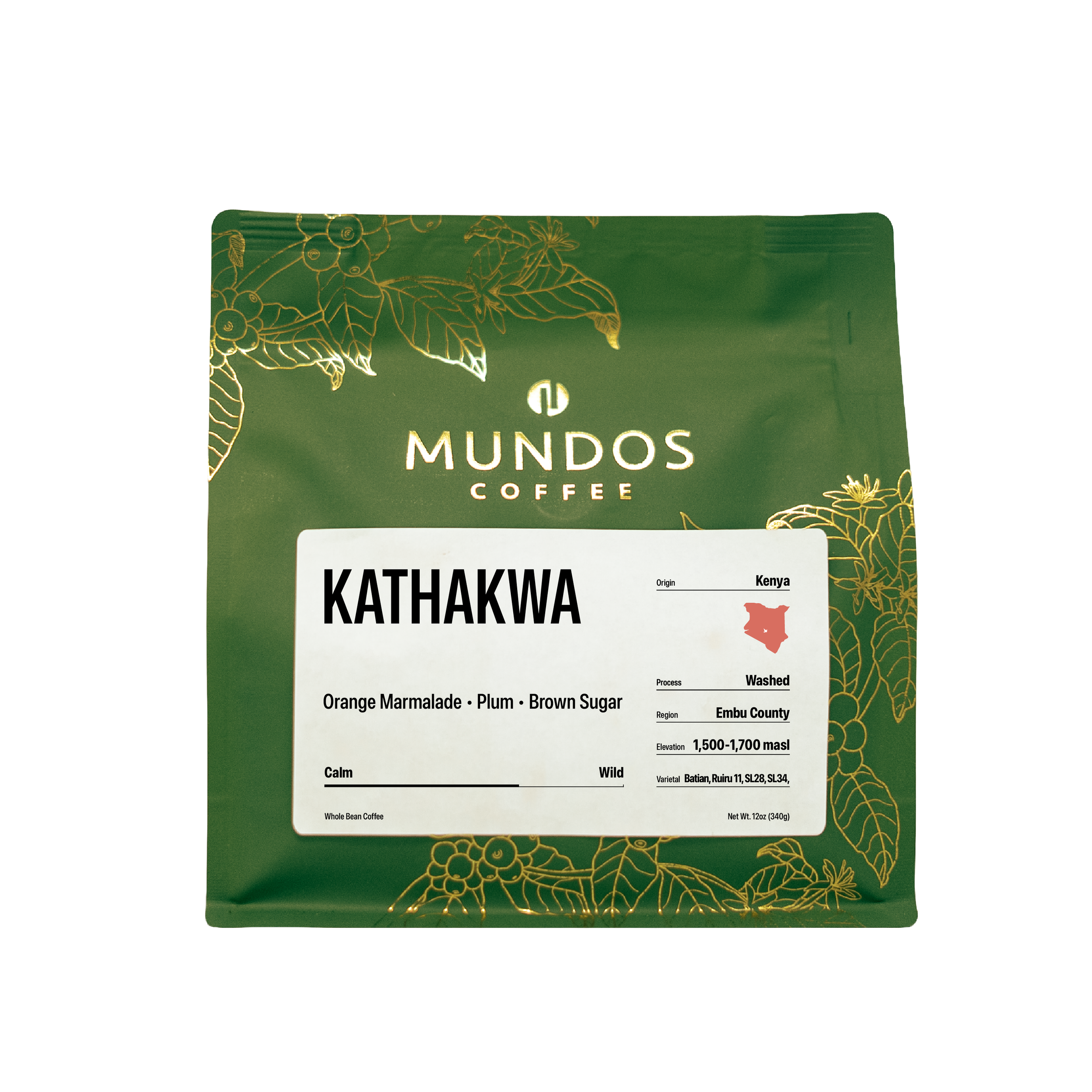
[KEN-YUH • KUH-THOK-WUH]
Process: Washed
Orange Marmalade, Plum, Brown Sugar
Classic bright Kenya profile, with a plum-like acidity and a brown sugar sweetness.
Kathakwa Factory, part of the long standing Kibugu Farmers Cooperative Society, sits on the southern slopes of Mount Kenya at 1,500–1,700 masl, drawing cherry from more than 1,000 smallholder farmers straddling the Embu–Kirinyaga border. Ripe cherry is delivered daily and processed using Kenya’s traditional disc depulpers, followed by 24 hour wet fermentation and a clean water soak that ensures thorough mucilage removal and clarity in the cup. Coffees are slow dried on raised beds for 1–2 weeks, then carefully conditioned on site for moisture stability. Supported by Kibugu FCS’s agronomic training and pre-harvest financing, Kathakwa consistently delivers clean, structured Kenyan profiles with excellent physical preparation and grading reliability.
Whole Bean Coffee
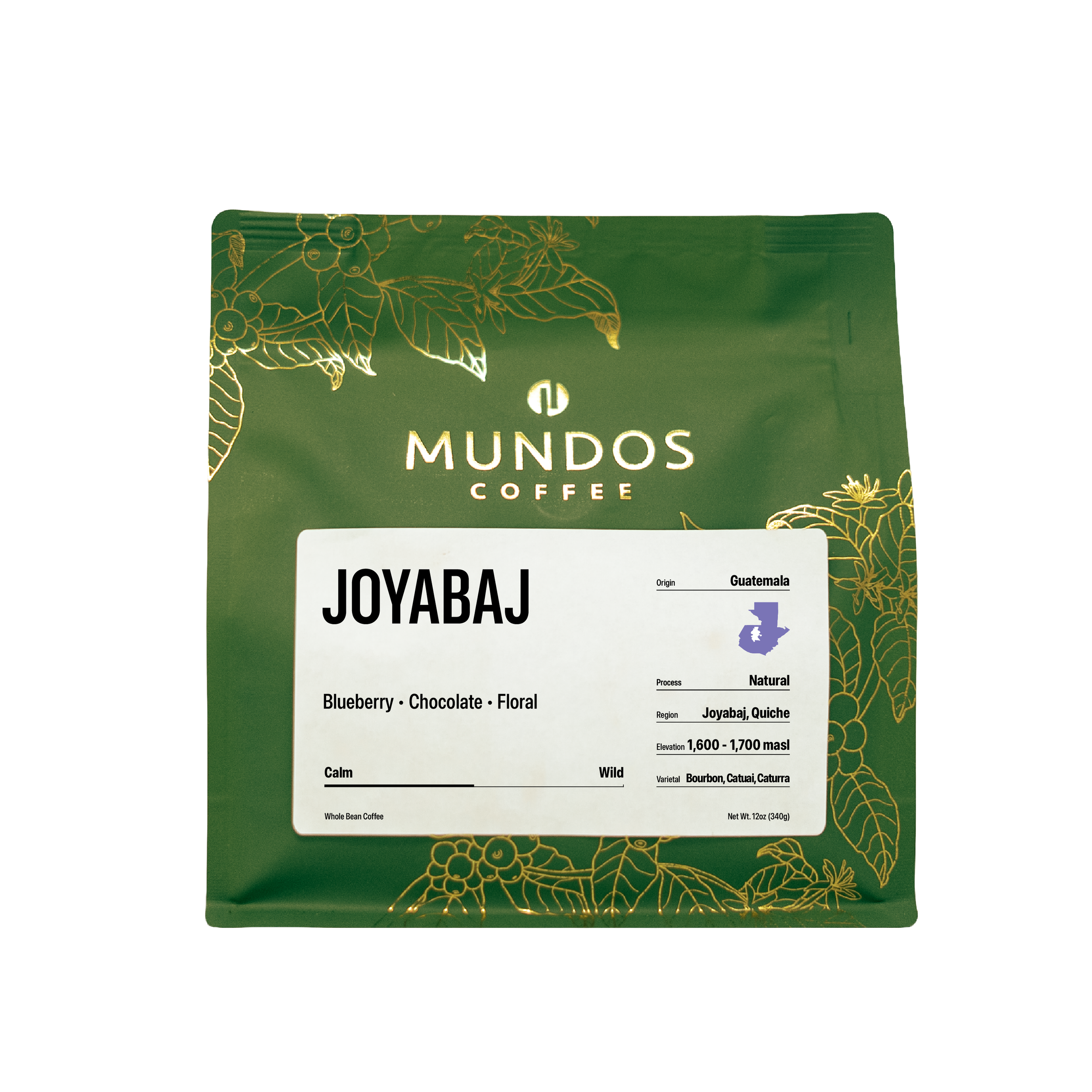
[GWAT-AH-MAL-UH • HOH-YAH-BAH]
Process: Natural
Blueberry, Chocolate, Floral
The Joyabaj Wet Mill is located in a central area of the mill and is accessible to the services necessary to operate. The first year of operation was in 2021 and it operated from January to April, processing 5,000 quintals of parchment coffee.
The harvesting, collection and selection of coffee beans are carried out by family members of each producer. Not all members of the communities have the means of transportation to transport their coffee, therefore there are people in charge of transporting the cherry coffee to the Joyabaj Wet Mill. In the Joyabaj Wet Mill the process begins with the washing of the cherry coffee, followed by a selection process that eliminates floating coffee beans. The next step is the fermentation of the coffee with the husk, which takes an average of 8 hours, followed by the transfer process to the drying patios or African beds. The drying process takes approximately 8 to 10 days. Manual movements are made so that the drying process is uniform and daily checks are made to ensure that the drying process is properly controlled.

HIGHLAND COLLECTION
Whole Bean Coffee
[KUH-LUM-BEE-YUH • HEY-MEE • NOON-YEZ • WOOSH • WOOSH]
Process: Honey
Wush Wush is a rare variety grown at high altitudes in fertile land which promotes a fruity, delicate cup of coffee. This cup has notes of cranberry, plum and tangerine.
The farmer, Jaime Nuñez is a part of an innovative project working towards enhancing biodiversity in coffee plantations and the surrounding area. To do this, they create floral corridors across their plantations to provide habitats for pollinators that play a crucial role in sustaining the ecosystem.
Nuñez and farmers alike are adopting these sustainable practices, avoiding pesticides and protecting the environment. By doing this, the farmers can also earn higher prices for their coffees.

PRE-ORDER
Coffee will roast and ship on Tuesday, July 28th, 2026.
HIGHLAND COLLECTION
Whole Bean Coffee
[KUH-LUM-BEE-YUH • SAY-SAR • LAY-DESS-MAH • GESH-UH]
Process: Natural
A silky and complex cup with notes of blackberry, cloves, and pie crust.
Cesar Ledesma grows this exceptional coffee under canopy in a sustainable agroforestry plantation. Here, Cesar is committed to producing the highest quality coffee while protecting the diverse birds and wildlife that thrive on his farm. Sustainability and excellence are combined through the avoidance of pesticides, conservation of natural resources, and cultivating a variety of beans.
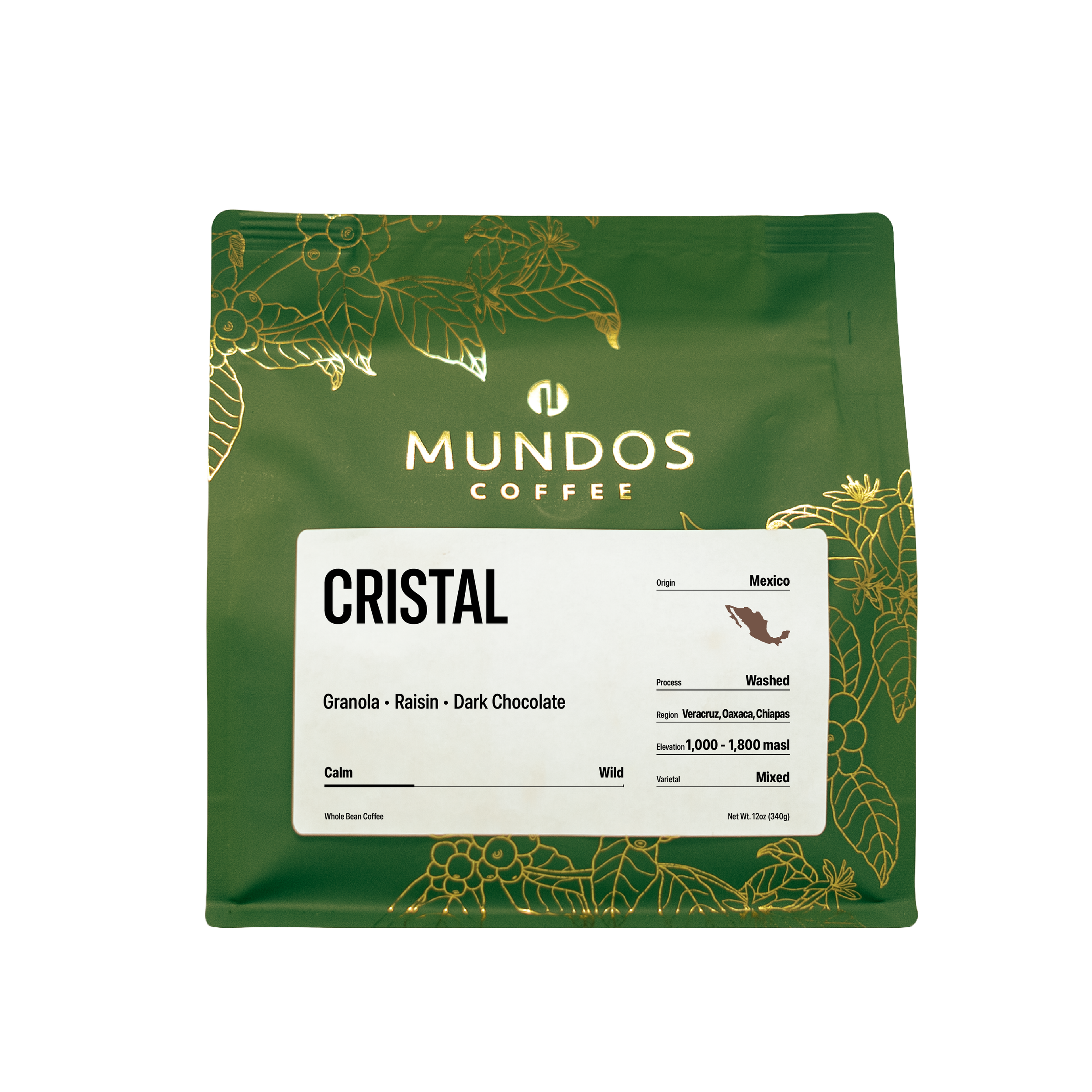
Whole Bean Coffee
[MEX-A-KOH • KREE-STAHL]
Process: Washed
Granola, Raisin, Dark Chocolate
Smooth and chocolatey cup with a raisin sweetness. Clean, straight-forward easy to drink coffee that everyone will love.
Cristal represents an amalgam of coffees from across Mexico’s growing regions, including Veracruz, Oaxaca, and Chiapas.
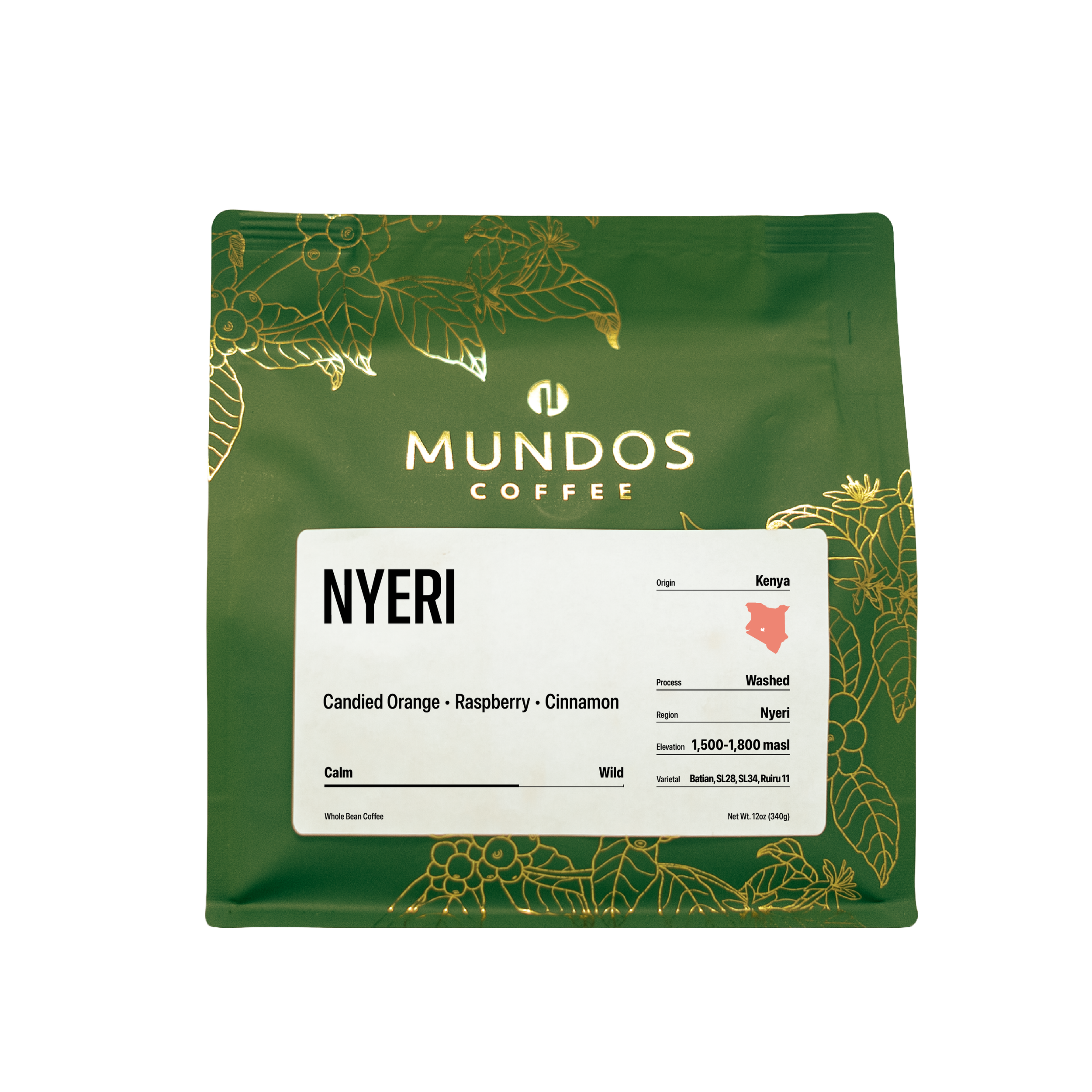
Whole Bean Coffee
[KEN-YUH • NIE-YEER-EE]
Process: Washed
Candied Orange, Raspberry, Cinnamon
This sweet and syrupy Kenya is a collection of coffees from various farms in the Nyeri region, grown in elevations between 1,500 - 1,800 masl
Nyeri is situated between Mt. Kenya and the Aberadare Mountains, creating a perfect geographic and climactic area for coffee production. This area is historically the center of Kenya's coffee production due to the rich soil and fresh water moving through the area from the mountains. This region is home to the Kikuyu people, who have resided between the mountains for centuries. This area is rich with forests, wildlife, eucalyptus, bamboo, and rainforests.
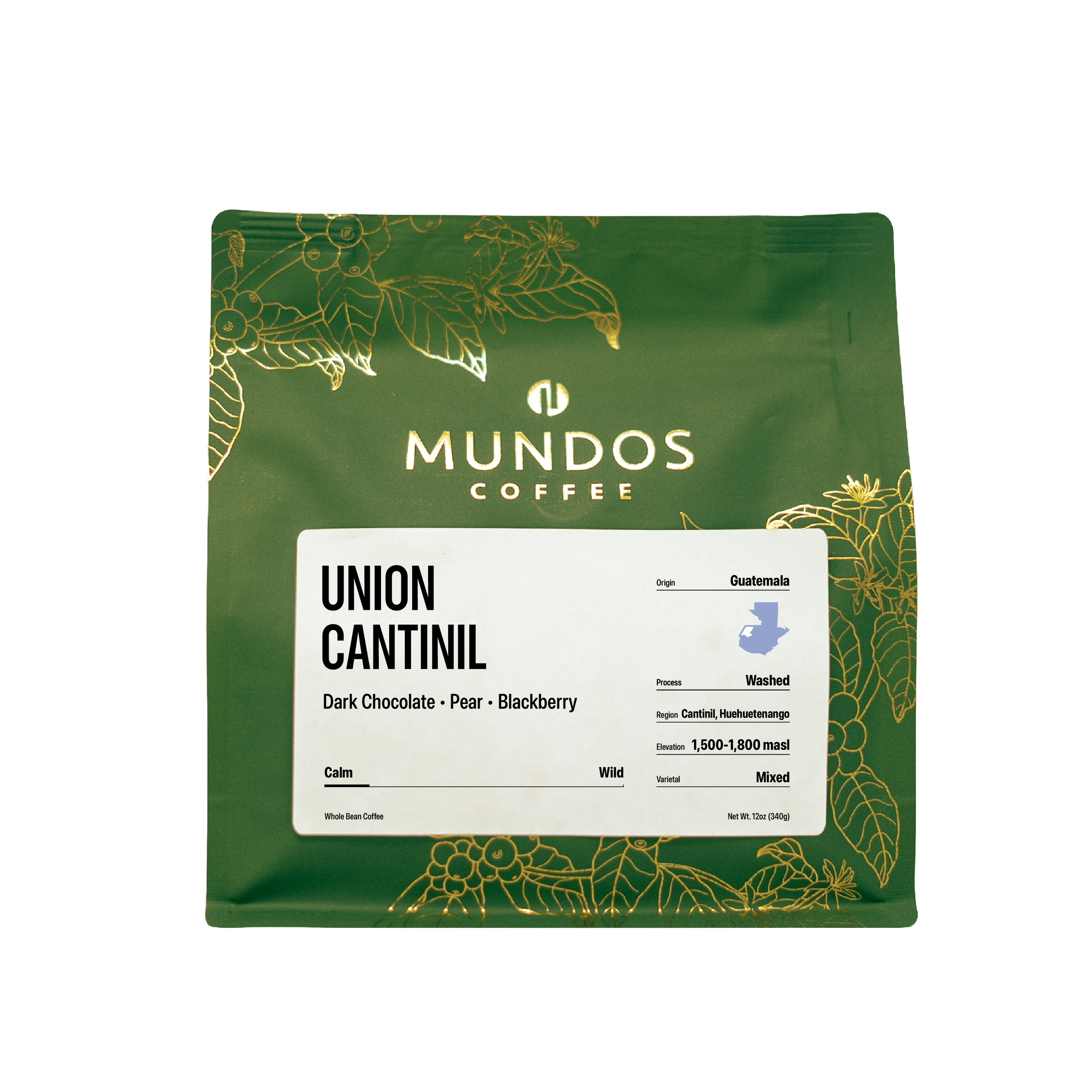
Whole Bean Coffee
[GWAT-AH-MAL-UH • YOON-YIN • KANT-UH-NIL]
Process: Washed
Dark Chocolate, Blackberry, Pear
The return of the nostalgic Guatemala Union Cantinil. This coffee is incredibly cozy with notes of dark chocolate and blackberry, super smooth and sweet.
This is an SHB EP grade washed coffee from Unión Cantinil municipality, located in the Huehuetenango department of Guatemala. This coffee is produced by smallholder farmers who typically have around 1ha of land and cultivate the varieties of Caturra, Catuai, Bourbon & Pache.
The coffee is fully processed by smallholder farmers. Cherries are harvested ripe and then de-pulped usually by either manual or small-motored pulpers. This is then left to ferment overnight until the coffee’s remaining mucilage has broken down. Washing is then carried out, usually in specialised channels.
The washed parchment is always sun dried as the small holders don’t have access to mechanical driers. The drying takes advantage of every bit of flat, full sun space that can be found, which is limited in Huehuetenango due to the mountainous and shaded terroir. This means the coffee is dried on roof tops, small patios and on tarps. It must be turned to ensure even drying and avoid over-fermentation or mold. Once the drying is complete the coffee is delivered to our Union Cantinil buying station for quality control and consolidation.
Huehuetenango is both a large department (or state) and the eponymous capital city of that same department. While coffee isn’t grown in the city of Huehuetenango, it is abundant in the high altitude mountains to the west and north of the city. Producers are predominantly smallholders with around 1 hectare of land. In order to buy coffee directly from these smallholder groups we have installed a number or regional micro-warehouses and buying stations. This has both enabled us to receive coffee directly from the small holders and cut the transport & logistics costs for them; all while providing stable market access for these remote communities.
Our micro-warehouse in Unión Cantinil is located in the heart of the municipality and receives coffee from a small radius of about 15km. This high altitude region has some of the best coffees in Huehuetenango. The generally north facing aspect of the mountains means the sun takes its time reaching the small plots where the coffee is grown. While there is some Catimor planted in the region, the common varietals are more traditional and conducive to a high quality cup, such as Bourbons, Caturras and Pache
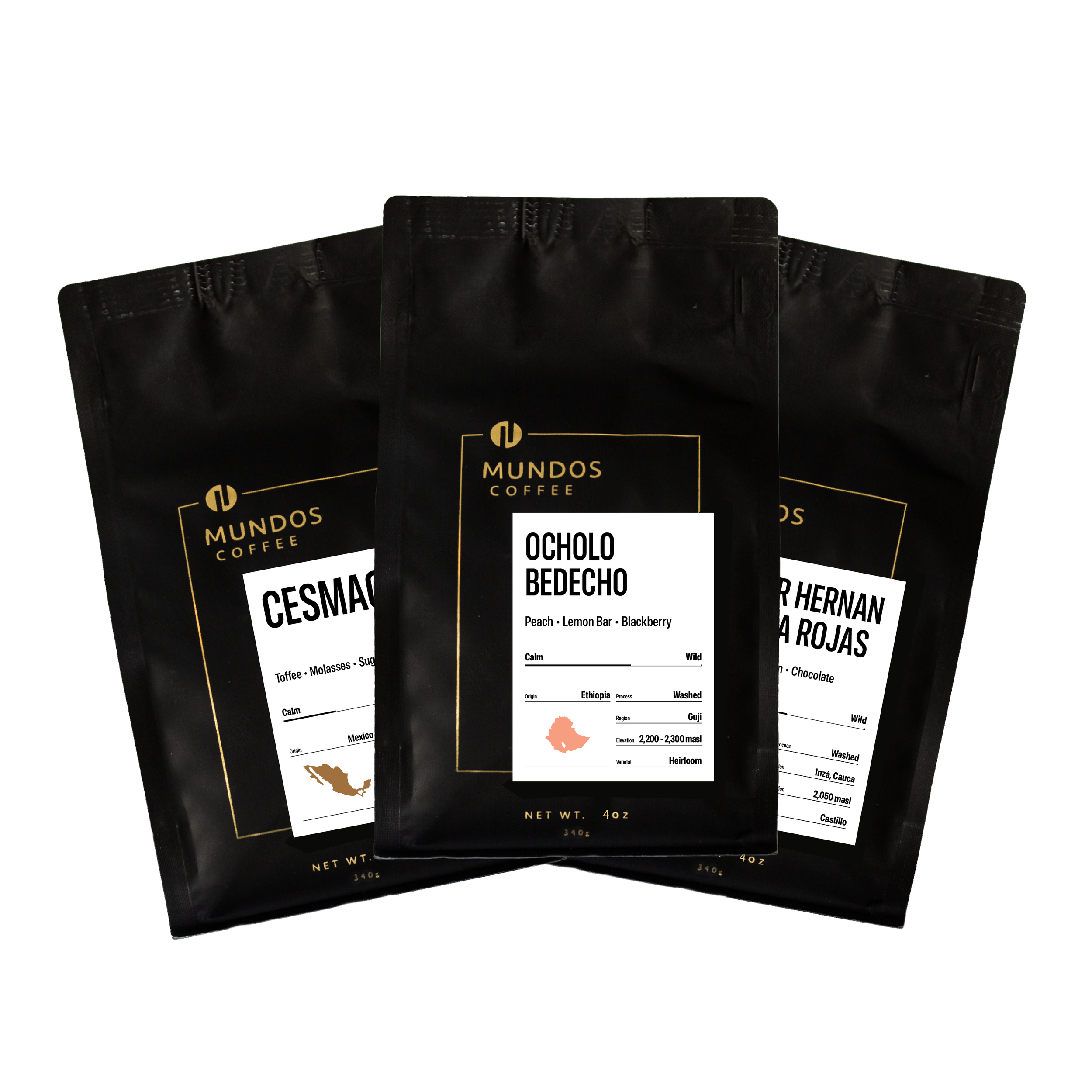
3 - 4 oz Sample bags of our favorite coffees. The coffees will vary depending on what we have in stock, but we will always send you our favorite!
You can pay a flat $7 for shipping or enter discount code LOCALPICKUP if you would rather pick up at one of our cafes.
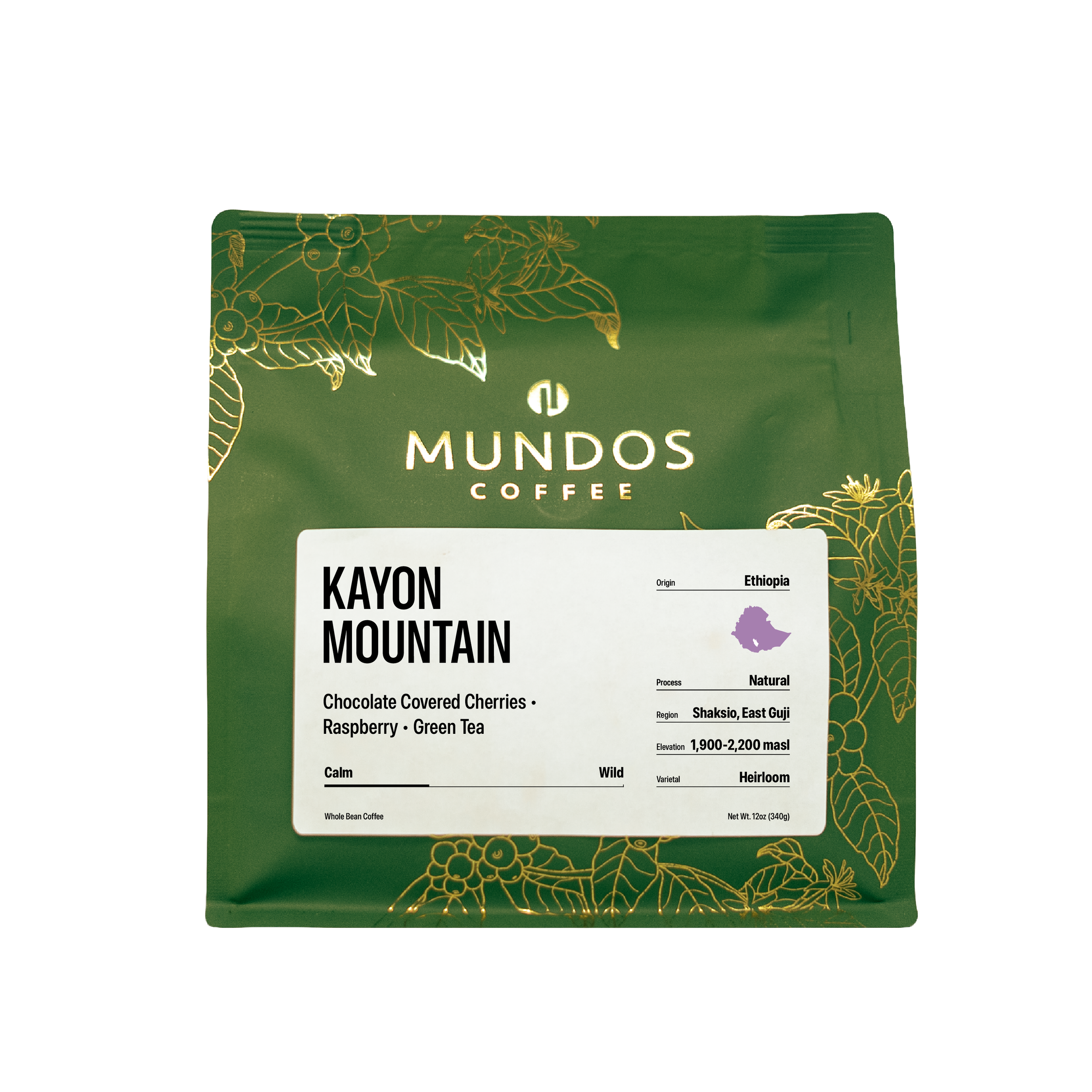
Whole Bean Coffee
[EETH-EE-OPE-YA • KYE-ON • MOWN-TAN]
Process: Natural
Chocolate Covered Cherries, Raspberry, Green Tea
Syrupy sweet natural process from Kayon Mountain Farm, a beloved coffee from Guji, Ethiopia.
The Kayon Mountain Coffee Farm is 500 hectares with about 300 hectares planted in coffee and has been owned and operated by Ismael Hassen Aredo and his family since 2012. It is located 510 kilometers south of Addis Ababa, and the property crosses the border of two villages—Taro and Sewana—located in the Oromia region, in the Guji zone of the Shakiso district of Ethiopia. Ismael oversees a staff of 25 permanent full-time and 300 seasonal employees, and the farm management offers free transportation services as well as financial support for building schools and administration buildings for the community. The farm competes with a nearby mining village for seasonal workers, so Ismael and his family tend to pay higher wages to their pickers in order to incentivize them returning year after year. Kayon Mountain farm has a nursery on-site and utilizes shade (acacia and other indigenous trees) to protect the coffee as well as for creating compost to fertilize naturally. Ismael is meticulous about not only the structure and management of the farm itself but also the harvesting and processing.
Can’t find the coffee you are looking for? Look it up in the Coffee Archive

Whole Bean Coffee
[SOO-MAH-TRUH • ASS-MEN • GOO-YO • MILL]
Process: Natural
Rich and fermenty, with a savory Kalamata olive finish
This coffee comes from a small mill in the Pegasing district of Takengon, in Sumatra's coffee-famous Aceh region ran by Cup of Excellence winner Asman Arianto. The Asman Gayo mill serves several small coffee producers within the Pantan Musara villages. Several years ago, these producers were dislocated from their homes and land because of a natural disaster, and they have rebuilt their lives and farms with a new focus on coffee. Unlike the vast majority of other Sumatran coffee receiving and processing centers, this mill is producing Washed coffees, as well as Naturals.