


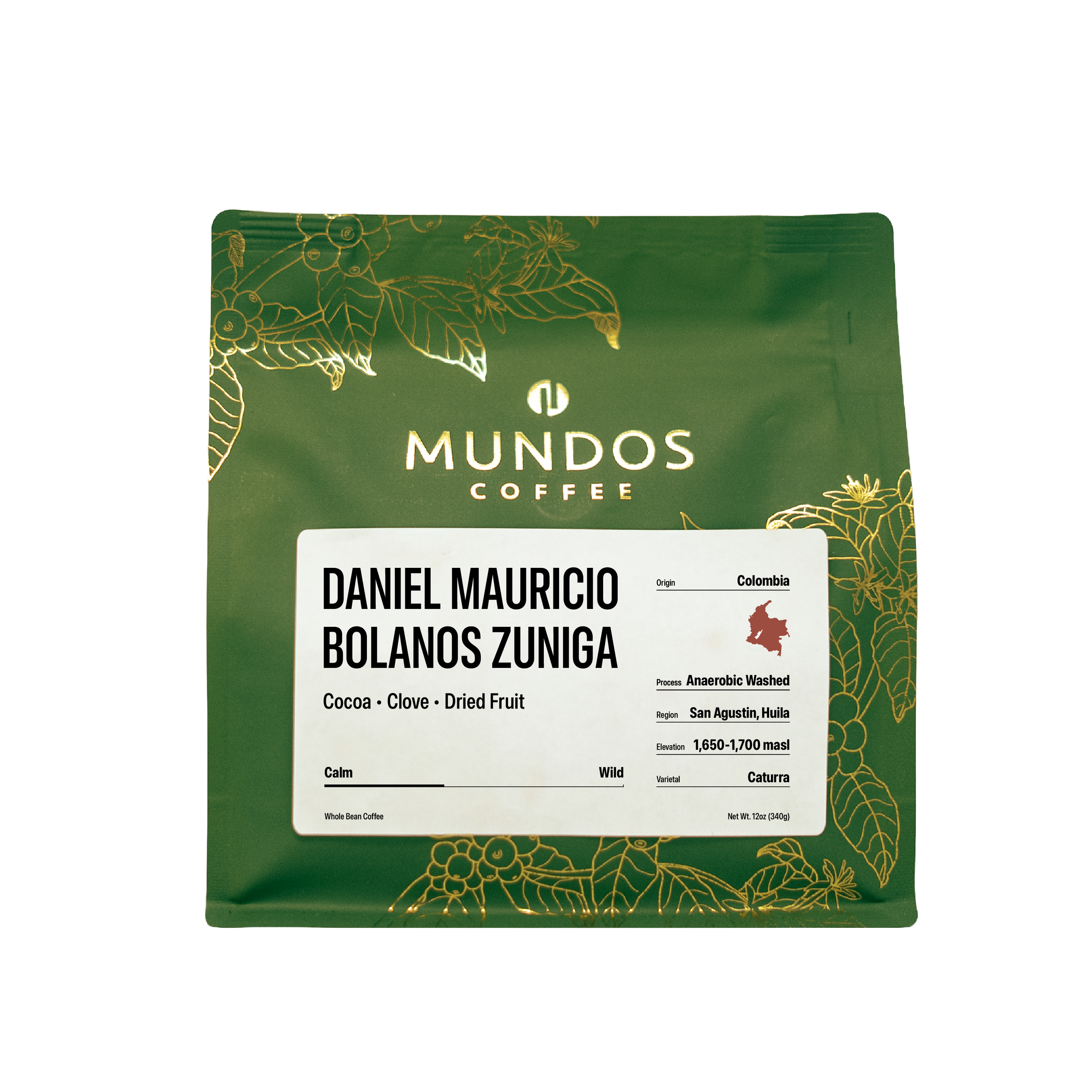
Whole Bean Coffee
[KUH-LUM-BEE-YUH • DAN-YULL • MOR-EES-EE-OH • BOHL-AHS-OS • SOO•NEE•GUH]
Process: Anaerobic Washed
Cocoa, Clove, Dried Fruit
Daniel Mauricio Bolaños owns and runs the farms El Pacer and La Esperanza, both a part of the Asociacion los Naranjos in San Agustin. These farms sit at altitudes of 1700 masl and 1650 masl respectively. Both are 5-hectare farms with 2,000 to 11,000 coffee trees and other produce grown on-site. Fly crop runs June through August with the main harvest being November through January. For Daniel's fermentation process, the cherries are collected and taken to a tank with water to remove the impurities. Then the cherries are removed and added to an open plastic container for 48 hours, pulped, and added to the plastic container again for 72 hours with a little water. The coffee is then washed and moved to dry either on African raised beds or on Parabolic drying beds for around 20-25 days.
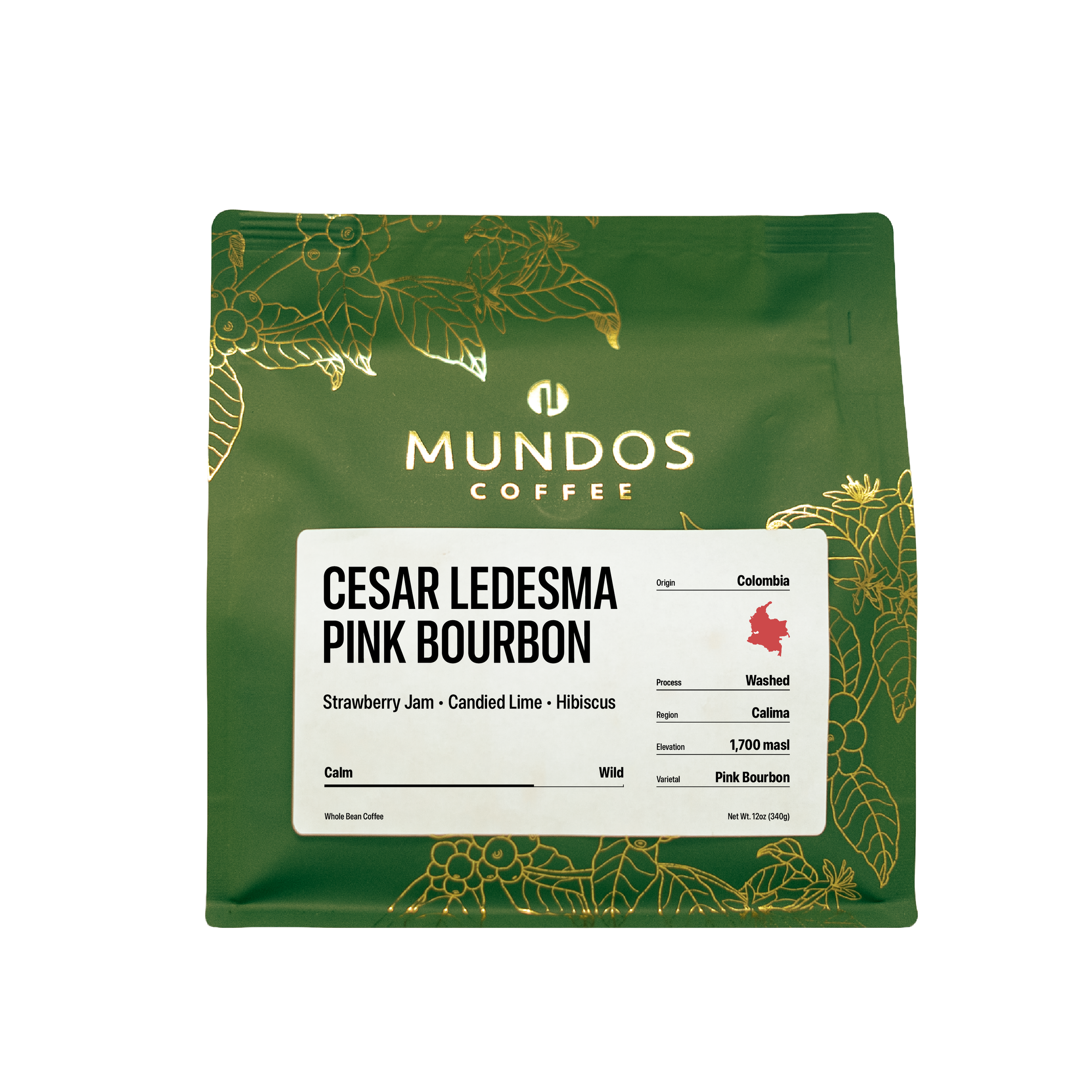
Whole Bean Coffee
[KUH-LUM-BEE-YUH • SAY-SAR • LAY-DESS-MAH • PINK • BORE-BONE]
Process: Washed
Strawberry Jam, Candied Lime, Hibiscus
Bright and sweet, light syrupy body with notes of candied lime and hibiscus.
Cesar Ledesma grows this exceptional coffee under canopy in a sustainable agroforestry plantation. Here, Cesar is committed to producing the highest quality coffee while protecting the diverse birds and wildlife that thrive on his farm. Sustainability and excellence are combined through the avoidance of pesticides, conservation of natural resources, and cultivating a variety of beans.
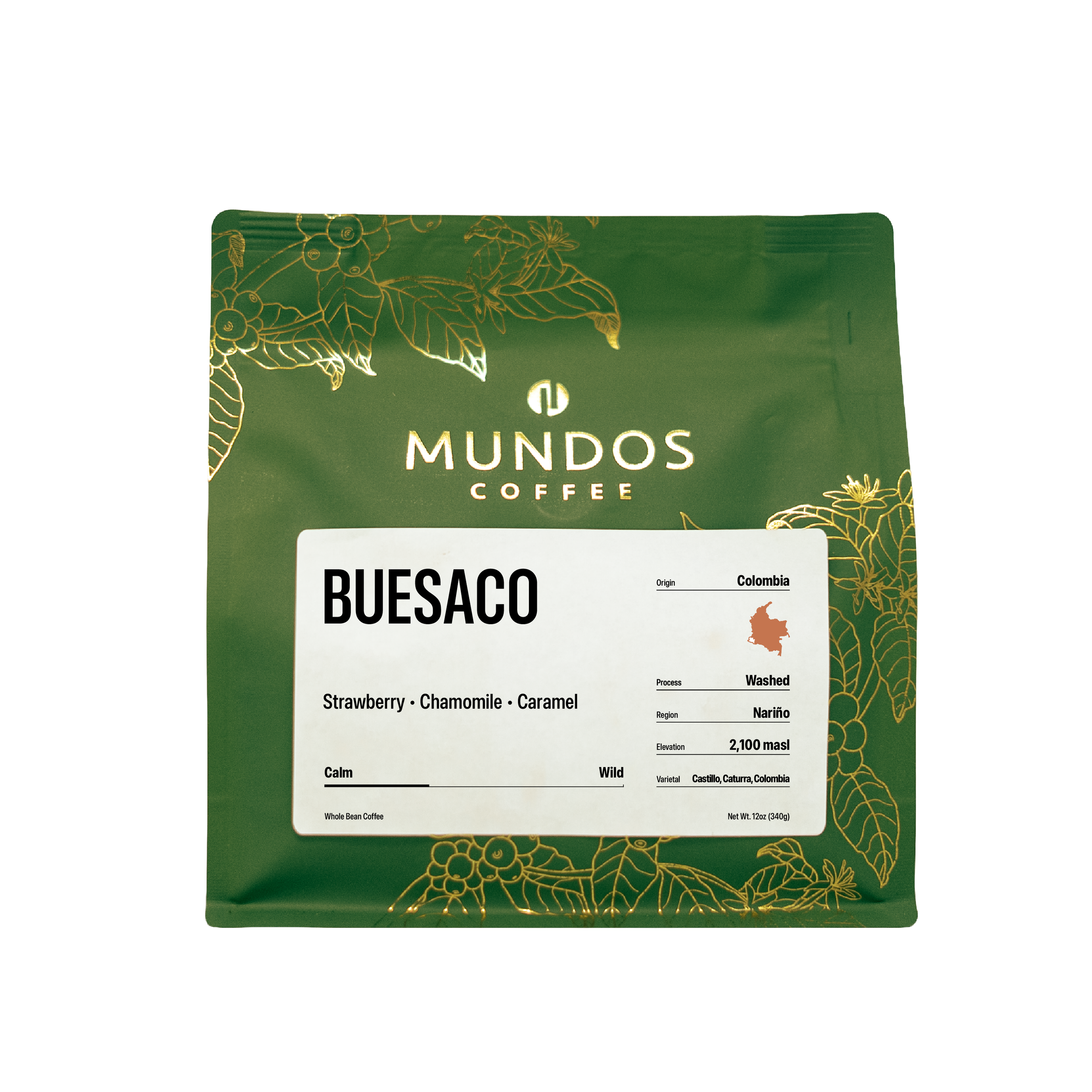
Whole Bean Coffee
[KUH-LUM-BEE-YUH • BWEH-SAK-OH]
Process: Washed
Strawberry, Chamomile, Caramel
Bright and fresh cup, strawberry sweetness with a tea-like body. Caramel undertones.
Sourced from the elevated terrains of Buesaco, Nariño in southern Colombia, this exquisite coffee is cultivated at over 2,000 meters above sea level on average. Buesaco's unique geographic and climatic conditions, characterized by volcanic soil and an average temperature of 18.6 °C, provide an optimal environment for producing coffee with a distinct mild taste, high acidity, and sweet notes.
The region’s coffee cultivation heritage dates back to the 18th century, growing over time to become an integral part of the local cultural, economic, and social fabric. With its first international exposure in the early 20th century, Buesaco. Nariño's coffee has since been celebrated in the specialty coffee segment worldwide for its unparalleled quality, cultivated in the unique environmental conditions of the region.
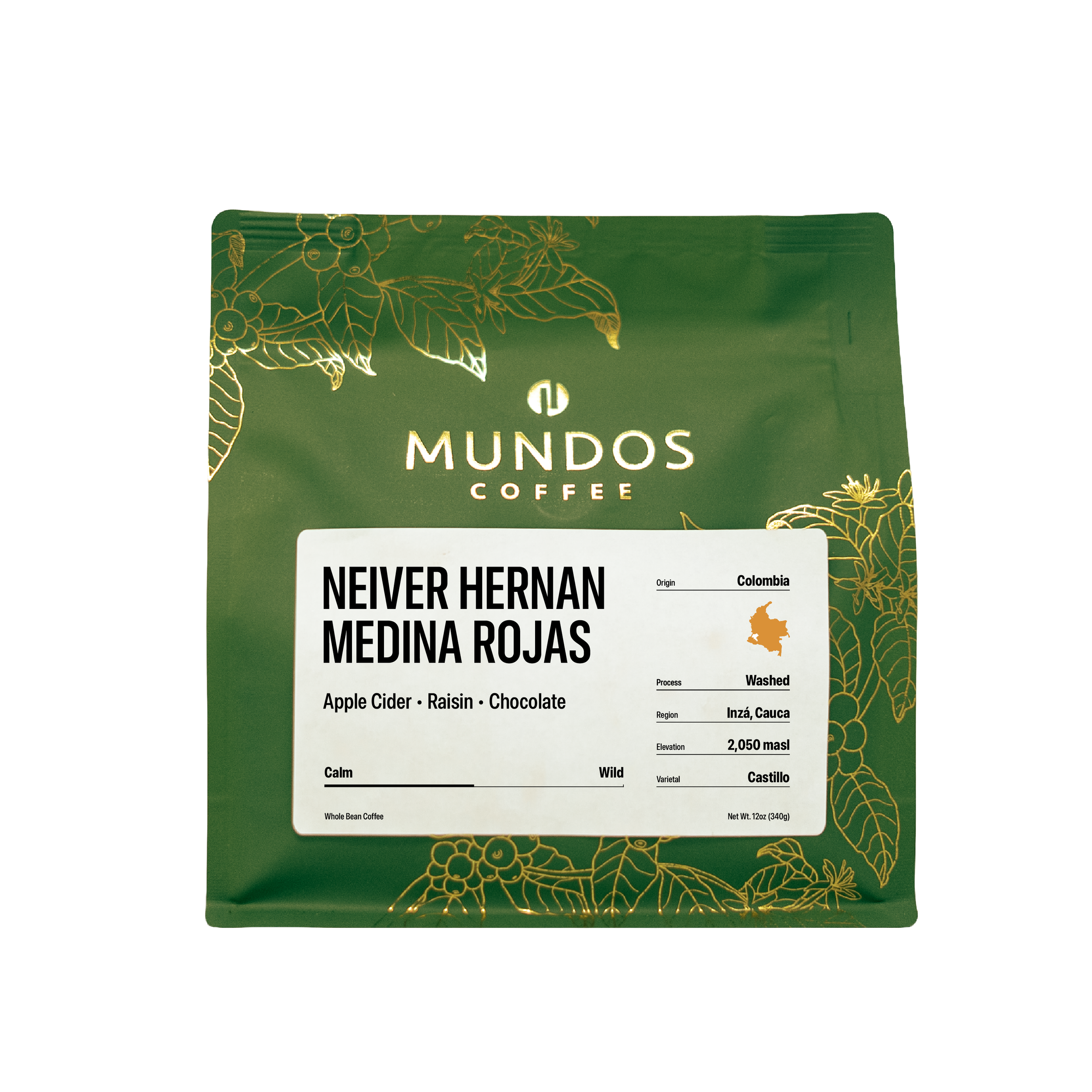
Whole Bean Coffee
[KUH-LUM-BEE-YUH • NEE-VER • EHR-NAN • MUH-DEE-NUH • ROW-HASS]
Process: Washed
Apple Cider, Raisin, Chocolate
Neiver Hernan first came into contact with coffee as a child, but only came to see it’s true significance in his twenties. Years later, inspired by his wife he expanded the farm. He focused on improving agricultural practices and building infrastructure for processing and drying. He lives happily with his wife and children on the farm, enjoying the significance coffee has brought to their family.
An incredible cold weather coffee with notes of spiced apple cider and chocolate.
Neiver Hernan Medina Rojas owns Loma Linda Farm in Cauca, Colombia. He first came into contact with coffee as a child, but only came to understand its true significance when he was in his twenties. At that point, he planted a small plot of traditional Bourbon Amarillo. It was years later, inspired by his wife, that he decided to expand the farm. Around eight years ago, he changed his approach to coffee farming, focusing on applying fertilizers at the right times, improving agricultural practices, and building the necessary infrastructure for processing and drying. This growth as a farmer came from continuous learning, which led him to explore the diverse flavor profiles and characteristics that different practices can produce. Thanks to this new approach, he has optimized the quality of his coffee and improved its agricultural management. Today, his goal is to continue learning and refining his techniques. He lives happily with his wife and children on the farm, enjoying the significance that coffee has brought to their family.
Farm Maintenance
To ensure sustainable, high-quality coffee production, Neiver Hernán Medina carries out various maintenance activities on his farms. One of these is weeding, performed every three months. This practice not only removes vegetation competing for nutrients and sunlight but also facilitates harvesting by allowing pickers to move easily between the rows, improving efficiency and reducing picking times and costs. In addition, before applying fertilizer, the base of the trees is thoroughly cleared (a practice called plateo) to optimize nutrient absorption, an essential practice for healthy growth of the coffee plants. Thanks to the elevation of the farm, at 2,050 meters above sea level, it is not necessary to use frequent insecticides or chemical treatments for pest control, as the cooler temperatures limit insect activity. Neiver also plants complementary crops such as plantains, avocados, and fruit trees like tangerines and lemons. These provide natural shade for the coffee plants, protect them from intense solar radiation, help retain soil moisture, reduce erosion, and enrich the soil with organic matter, while also providing additional income and food for the family.
Harvest
The harvest takes place in two seasons: the main season from October to December, and a smaller one called mitaca, from April to May. During these periods, a team of local pickers collects cherries in 21-day intervals, selecting only fully ripe fruit. After picking, the cherries undergo a flotation process that removes low-density fruit. These are typically underdeveloped, unripe, or affected by pests like the coffee berry borer, making them lighter than the rest. This step ensures that only the densest and highest-quality cherries move on to the next stage of processing. The altitude of the farm influences the ripening process, making it slower and more gradual compared to other regions. This allows the cherries to fully develop their characteristics, achieving higher density and ensuring an exceptional final product.
Processing
After picking, the cherries are placed in tanks or bins for 24 hours to allow fermentation to begin. During this time, microorganisms consume the sugars in the mucilage, which helps in the pulping process and contributes to the development of flavor and aroma. The cherries are then pulped and transferred to plastic tanks for a further 36 hours of dry fermentation. After this, the beans undergo three washing cycles. Drying takes approximately 15 days. The beans are laid out in layers no more than 3 centimeters thick and turned three times a day to ensure even drying. Due to the altitude and humidity of the area, this process can sometimes take slightly longer. To check if the coffee has reached the desired moisture level, a small sample is threshed by hand. If the beans have a uniform, cement-like appearance and a moisture content of 9–11%, the batch is considered ready. The dried coffee is packed in bags and stored on wooden pallets for approximately 15 days to allow stabilization. The storage room is used exclusively for coffee to prevent any risk of contamination.

Whole Bean Coffee
[KUH-LUM-BEE-YUH • PA-LOW • DE • ROW-SA]
Process: Washed
Honeydew, Limeade, Rhubarb
From a select group of producers in Huila, who have shown great care in agronomic and post-harvest management. Producing oustanding quality Pink Bourbon lots. Cherries are handpicked, fermented for 36-48hrs and are washed then dried in ventilated solar dryers.
With the sweetness and body of honeydew melon, this varietal— derived from an Ethiopian Landrace— has the tartness of limeade and rhubarb.
Palo de Rosa originates from a select group of producers in Huila who have shown great care in agronomic and post-harvest management, and are thus able to coordinate in the production of outstanding Pink Bourbon lots. Palo de Rosa lots are characterized by a harvesting and fermentation process that seeks to maintain its unique quality. Ripe cherries are hand-picked, fermented for 36-48 hours, and then undergo a traditional washing process before being placed in ventilated solar dryers that ensure an even and consistent drying process.
Originally thought to be a mutation of the Red and Yellow Bourbon varieties commonly grown in Colombia, there is now evidence to suggest Pink Bourbon is an Ethiopian landrace variety, arriving in Colombia via unclear means. Regardless, Pink Bourbon is a coffee unique in appearance and flavor profile. Farmers must carefully manage crop placements to ensure the proper cross-pollination of cherries that can range in color from light red to soft orange. During harvest, pickers must pay extra attention because determining ripeness requires some inspection and isn’t as simple as choosing only the reddest cherries. This challenging process produces complex flavors.
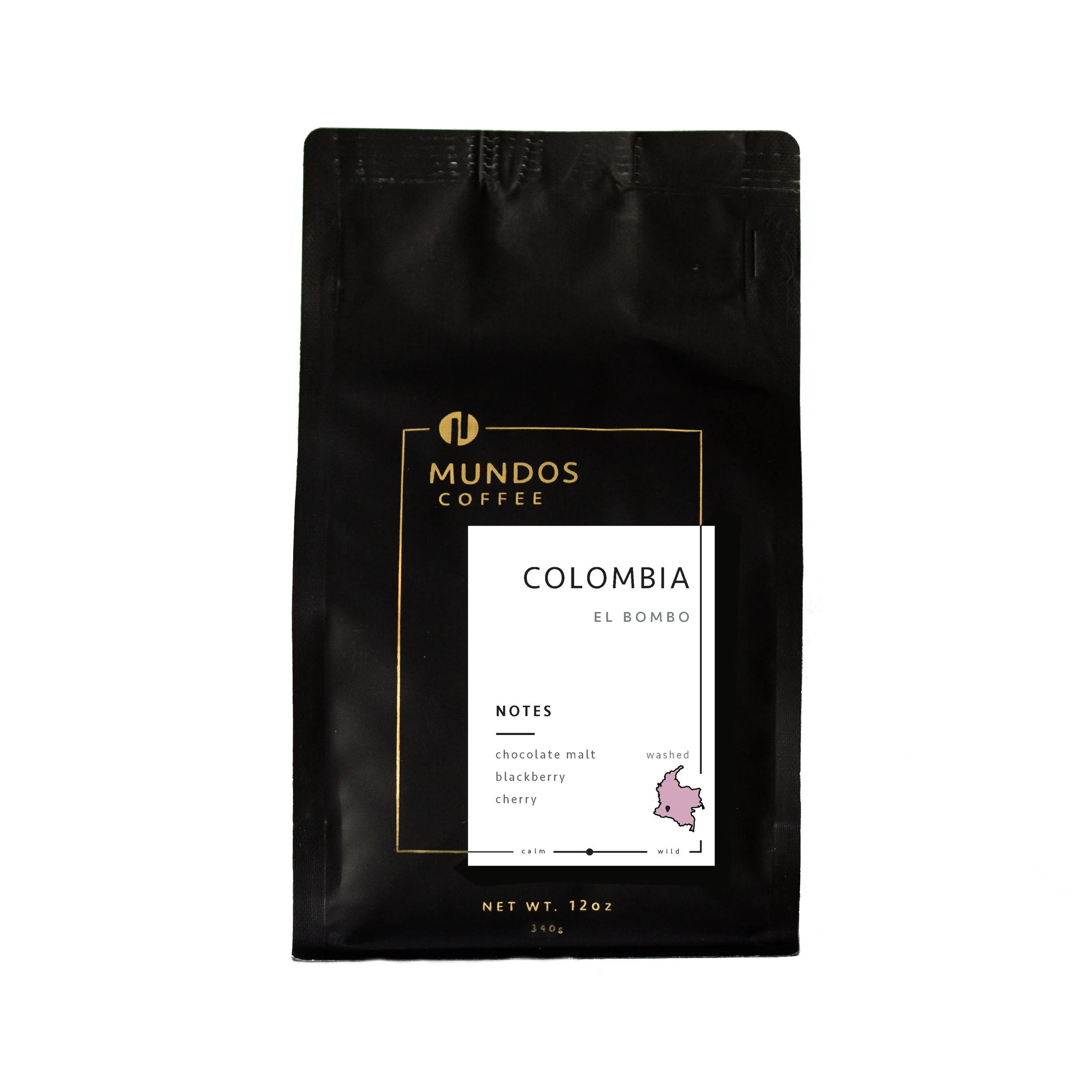
12 oz bag of whole bean coffee
Process: Washed
chocolate malt, blackberry, cherry
Among the many small highland lakes of the Huila region of southern Colombia, 95 coffee growers from six villages came together in 2016 to form the El Bombo Cooperative. Although their producer’s association is only six years old, these small family farmers have almost 20 years of experience with organic practices. Working together to process and market their coffee, the farmers of El Bombo grow caturra, colombia, and Castillo at 1650-2100 under native shade trees and in a wide-variety of micro-climates.

12 oz bag of whole bean coffee
Process: Washed
strawberries, cocoa, silky
Whilst Huila is naturally blessed with optimal coffee growing geography, the key to great quality coffees from this region are the growers themselves. Coffee farming within the region is overwhelmingly small-scale. Indeed, approximately 80% of producers from the region farm coffee on less than 3 hectares of land. These small farms are tended by individual families with labour only very rarely being contracted out, which leads to more thorough and intensive management practices and great pride in the final product - which is, itself, an extension of the family.

12 oz bag of whole bean coffee
Process: Washed
sweet pepper, green apple, tomato
CENCOIC is a collection of 1059 smallholders located around Cauca in Southern Colombia. Together, this group boasts just over 1000 hectares of coffee under cultivation, but as individuals, farms are small and yields are too.
Their motto is “unity, earth, culture and autonomy”, all of which are expressions of their unique identity and history. Their focus is on preserving cultural traditions, social ties, ancient knowledge and their local environment in the context of a country that is quickly commercializing.
They describe their farming as ‘traditional practices enhanced by advanced training’. Activities include training in the field and in the classroom, collection of plastics for recycling into flotation tanks, the construction of bio-factories, and ongoing sensitization on environmental protections. Coffees are processed at home; but farmers have been taught how to treat the ‘honey water’ used during fermentation and return it to their fields as fertilizer.

12 oz bag of whole bean coffee
Process: Washed
molasses, red apple, grape
The Nariño region sits on the coast of southern Colombia, just north of the border with Ecuador, where coffee grows in the shadow of the volcano Galeros. Although Galeros is an active volcano, that activity has mostly been ash and steam eruptions in recent times, contributing to the “youth” of the nutrient-rich soil. The region is beautiful but rugged and all the coffee farms are very small above 1,700 meters. This coffee comes from the smallholder members of the “Association of Coffee Producers Ecoterra.” Ecoterra is an organization with 117 producers from the municipalities of La Unión, San Pedro de Cartago, Arboleda and SanLorenzo. Their objective is to work with greater intensity in diversifying the different processes of production and processing of coffee.

Whole Bean Coffee
Process: Washed
Cherry Cobbler, Caramel, Brown Sugar
The organization of Asobombo Inza was formed by a group of small producers in the municipality of Inza Cauca. There are a total of 80 producers, including 12 women and 68 men. This group of smallholder farmers have been working in the area for 8 years now. One of the priorities of the group's formation was to support producers in recovering soil and investing in farmers' crops and income to improve their quality of life. This coffee is grown at 1,500-2,200 masl, and varieties include Caturra, Colombia, and Castillo. The coffee is washed, then sun dried on patios and Marquesinas.

Whole Bean Coffee
[KUH-LUM-BEE-YUH • EL • POO-EN-TEY]
Process: Natural
Strawberry Pie, Blueberry, Chocolate
This natural process Colombia is exceedingly juicy and intense with notes of strawberry pie and blueberry. Smooth finish with chocolate notes.
The El Puente processing facility is located in Fundador township, Palestina, Huila, Colombia. “El Puente” translates to “the bridge”, named not only for the footbridge that spans a nearby river, but more importantly representing the connection that the processing facility creates between local smallholder producers and the global specialty coffee industry. The facility is just a 20 minute drive to the coffee centers of Pitalito and downtown Palestina, and is strategically located in an area with a high density of coffee to allow easy delivery of cherries by local coffee producers.
Coffee cherries are placed in a large parabolic dryer covered with shade fabric to regulate the temperature.

Whole Bean Coffee
[KUH-LUM-BEE-YUH • AH-PONE-TEY]
Process: Washed
Orange, Apple, Molasses
Enjoy this super sweet washed Colombia with notes of orange and molasses.
The Inga community of Aponte is comprised of descendants of the ancient, pre-Hispanic Incas. During the period of conquest, they remained isolated high in the mountains that became their natural refuge. This community did not resume significant contact with the rest of Colombia until the second half of the nineteenth century. Unfortunately, in the 1990’s, contact was mostly criminal, and the Inga’s refuge became a place of cruelty.
In the last decade the mountains have become a safe zone for the Inga tribe, and illegal crops were eradicated to give way to a new culture: coffee! The Caturra variety has been planted in the Inga territory, on smallholder properties in the Resguardo Inga Aponte, at an average of 2150 meters above sea level. This elevation, combined with the Galeras Volcano constantly shedding nutrient-rich ash, makes for an exceptionally complex and sweet coffee.

Whole Bean Coffee
[KUH-LUM-BEE-YUH • BWAY-SAK-OH]
Process: Washed
Apple, Caramel, Brown Sugar
Sit back and relax with a cup of Colombia Buesaco, you’ll find warm notes of apple and brown sugar.
Sourced from the elevated terrains of Buesaco Nariño in southern Colombia, this exquisite coffee is cultivated at over 2,000 meters above sea level on average. Buesaco's unique geographic and climatic conditions, characterized by volcanic soil and an average temperature of 65 °F, provide an optimal environment for producing coffee with distinct mild taste, high acidity, and sweet notes.
The region’s coffee cultivation heritage dates back to the 18th century, growing over time to become an integral part of the local cultural, economic, and social fabric. With its first international exposure in the early 20th century, Buesaco Nariño's coffee has since been celebrated in the specialty coffee segment worldwide for its unparalleled quality, cultivated in the unique environmental conditions of the region.

Whole Bean Coffee
[KUH-LUM-BEE-YUH • FA-MEE-LEE-YUH • LEH-GEE-ZA-MOH]
Process: Washed
Lime, Brown Sugar, Smooth
Crisp and bright washed process Colombia from the Leguizamo family farm in San Agustin, Huila.
Arnulfo Leguizamo is who every cafetero in Colombia should aspire to be: As a member of Asociación Los Naranjos, he is a leader in his community and supports his fellow farmers in their efforts to improve their quality. In 2011, he won the first prize at the Cup of Excellence with coffee from this farm. He continues to be a hard-working, approachable, and generous producer, and an inspiration to others—including his son Diego, who has started managing Finca El Faldon alongside his father and uncle Luis Felipe. Diego has trained up as a cupper and seeks to be in charge of operations in the future, a multigenerational coffee family.
Recently, Arnulfo has become even more of an innovator and leader in his community, by opening a café in San Agustin.
Finca El Faldon is managed by Luis Felipe, Arnulfo, and Arnulfo's son Diego. This lot comes from a portion of the farm they all manage together.
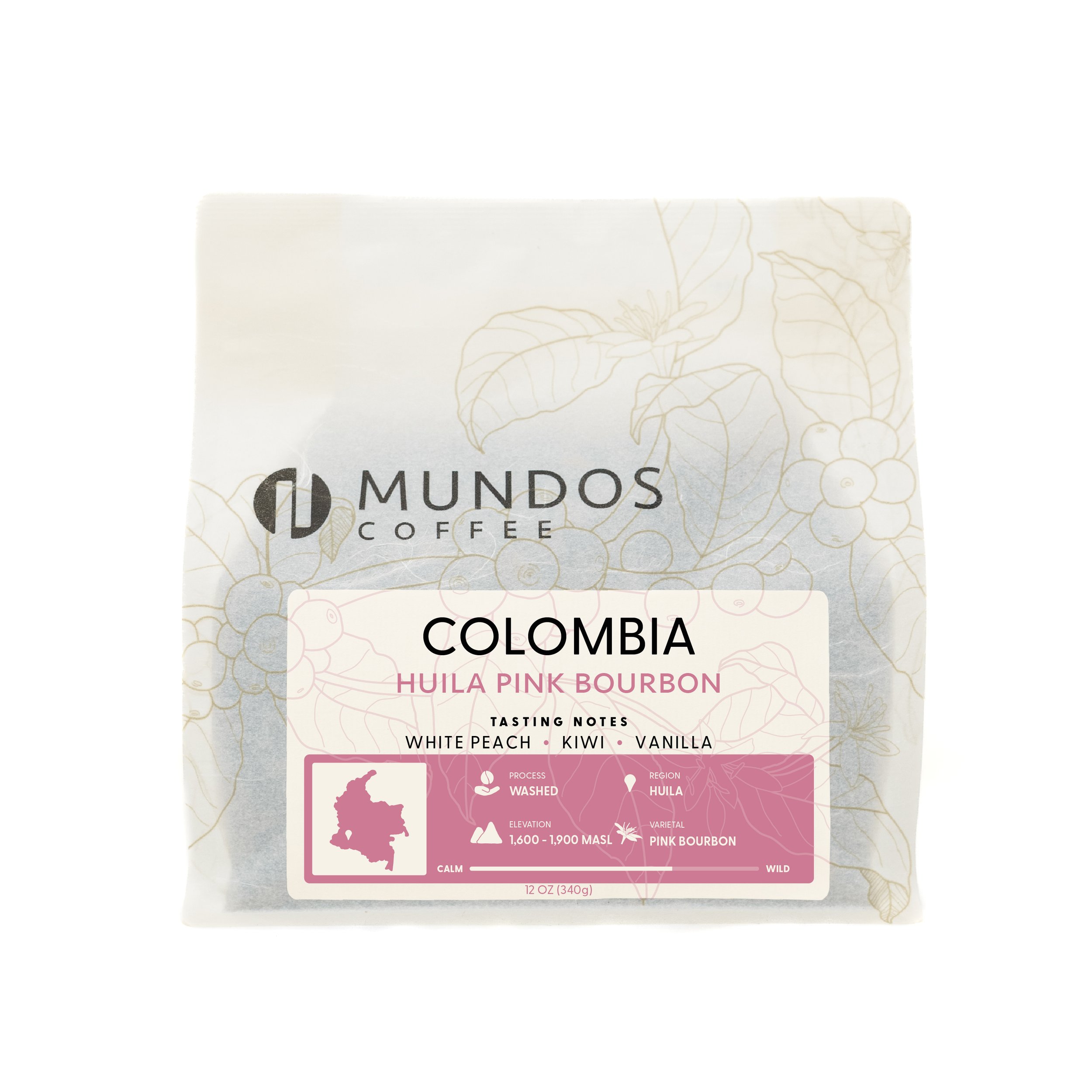
Whole Bean Coffee
[KUH-LUM-BEE-YUH • WAY-LUH • PINK • BORE-BONE]
Process: Washed
White Peach, Kiwi, Vanilla
This is an exceptional Pink Bourbon varietal from several different municipalities of Huila, Colombia. Originally thought to simply be a mutation of red and yellow bourbon varieties, evidence suggests this is an Ethiopian landrace varietal.
Super juicy and sweet with notes of white peach and kiwi. Smooth vanilla finish.
This single-variety Pink Bourbon lot is sourced from smallholder farmers located in the Pitalito, Palestina, Salado Blanco, and Acevedo municipalities, in the department of Huila. Some 25 farmers (10 women, 15 men) contributed to this high-elevation lot.
Originally thought to be a mutation of the Red and Yellow Bourbon varieties commonly grown in Colombia, there is now evidence to suggest Pink Bourbon is an Ethiopian landrace variety, arriving in Colombia via unclear means. Regardless, Pink Bourbon is a coffee unique in appearance and flavor profile. Farmers must carefully manage crop placements to ensure the proper cross-pollination of cherries that can range in color from light red to soft orange. During harvest, pickers must pay extra attention because determining ripeness requires some inspection and isn’t as simple as choosing only the reddest cherries. This challenging process produces complex flavors.
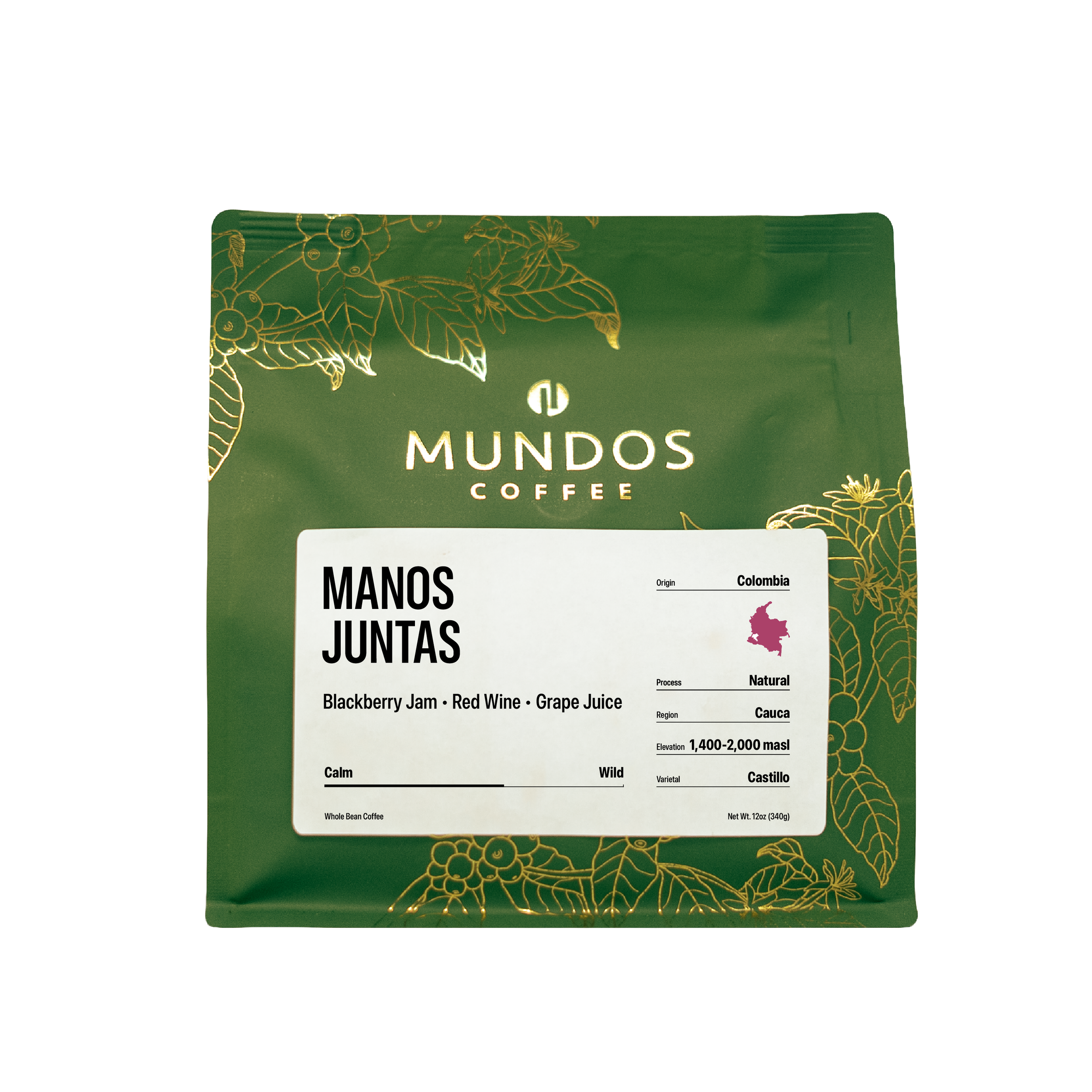
Whole Bean Coffee
[KUH-LUM-BEE-YUH • MAH-NOUS • HOON-TAS]
Process: Natural
Blackberry Jam, Red Wine, Grape Juice
This natural process Colombia from the Manos Juntas micromill is from producers of surrounding farms in Cauca.
Complex, deep sweetness of blackberry jam and wine. Subtle notes of clove and chocolate.
Manos Juntas is a micromill in Sotara area of Colombia's Cauca region. The entire concept of this micromill is based on simplifying tasks and responsibilities. This particular offering was first purchased in its cherry form when delivered to the mill on the day of harvest. Upon arrival, the Brix and pH were recorded, and the cherries are placed in large hermetic tanks for a five-day-long anaerobic fermentation: Each tank is labeled with the name of the producer, to retain traceability. During this period, nitrogen gas is introduced into the tanks in order to stimulate the yeast. Brix and pH are measured constantly through this process and are used to determine the stopping point for fermentation; the coffee is then subjected to 68°F temperatures in order to cease fermentation and remove the yeast and other microorganisms. For Honey-processed coffees, the cherries are then depulped and dried with the mucilage on in raised beds under shade. For Naturally-processed coffees, the cherry is then "aged" in tanks for a period of five more days before they are taken to solar dryers. Drying takes 30–45 days. Oncedried, the coffee is cupped and samples are sent. They are then approved, milled, and shipped. Producers get paid upfront for their coffee, typically producers have to wait 35 to 40 days for coffee to dry before selling it. Producers involved are from surrounding farms. This means they need only to travel a short distance to deliver coffee, as opposed to driving many kilometers into town. Coffee infrastructure, like drying beds, fermentation tanks, and depulpers, can be very expensive to purchase and maintain. With this model, farmers can forgo all of this hassle and focus on maintaining healthy trees.

Whole Bean Coffee
[KUH-LUM-BEE-YUH • AH-PONE-TEY]
Process: Honey
Pink Lemonade, Sourdough, Blackberry
This Caturra variety has been planted in the Inga territory, on smallholder farms at an average of 2,150 masl. The elevation, as well as the Galeras Volcano providing nutrient-rich ash, make an exceptionally complex, and sweet coffee.
Just like pink lemonade, this coffee balances sweetness and tartness just right, with the complexity of sourdough and a smooth finish.
The Inga community of Aponte is comprised of descendants of the ancient, pre-hispanic Incas. During the period of conquest, they remained isolated high in the mountains that became their natural refuge. This community did not resume significant contact with the rest of Colombia until the second half of the nineteenth century. Unfortunately, in the 1990’s, contact was mostly criminal, and the Inga’s refuge became a place of cruelty. For years the tribe was forcibly involved in poppy and heroin production under the influence of guerrilla groups, drug traffickers, and paramilitaries. The once-peaceful mountains teemed with illegal plantations and violence, in which the Ingas were trapped until as recently as fifteen years ago.
In the last decade the mountains have become a safe zone for the Inga tribe, and illegal crops were eradicated to give way to a new culture: coffee! The Caturra variety has been planted in the Inga territory, on smallholder properties in the Resguardo Inga Aponte, at an average of 2150 meters above sea level. This elevation, combined with the Galeras Volcano constantly shedding nutrient-rich ash, makes for an exceptionally complex and sweet coffee.
Producers process coffee on their own properties, drying Honey coffee in stacked raisedbed solar dryers on their farms. This process reduces water used for washing coffee andcomplements the natural complexity of coffees from this special region.

HIGHLAND COLLECTION
Whole Bean Coffee
[KUH-LUM-BEE-YUH • FIN-KUH • HWAN • MAR-TIN]
Process: Washed
Amaretto, Caramel, Berry
Located in the highest part of Sotara. Juan Martin is dedicated to developing environmentally-concious practices as well as providing jobs to community members with educational opportunities.
This washed gesha has notes of berry and amaretto with a caramel and syrupy mouthfeel
Finca Juan Martin is an innovative and experimental farm owned and operated by Banexport. The goal and focus of this project are to cultivate, harvest, and process different varieties in order to develop appropriate practices for each step toward optimum coffee quality. Beyond this, Juan Martin serves as a resource and example for coffee producers that sell and export their coffees through Banexport. Located in the highest area of Sotara, just 30 mins from Cauca's capital of Popayan, Juan Martin is dedicated to developing environmentally-conscious practices as well as providing jobs to community members with educational opportunities. Various maintenance tasks are carried out at Juan Martín Farm: soil conservation is done because of the steep slope of the farm; undergrowth is allowed to grow to avoid erosion; evaluations are made on coffee crops to identify pests or diseases and eliminate them; the surface of the tree is cleaned every 75 days and coffee the space between rows is cleared with a scythe every 2 months in general, coffees here are cultivated, harvested, and processed while adhering to the highest standards of quality, organization, and control depending on the ambient conditions as well as the specific needs required by each variety as determined by various factors including Brix level, moisture content, and desired cup characteristics.
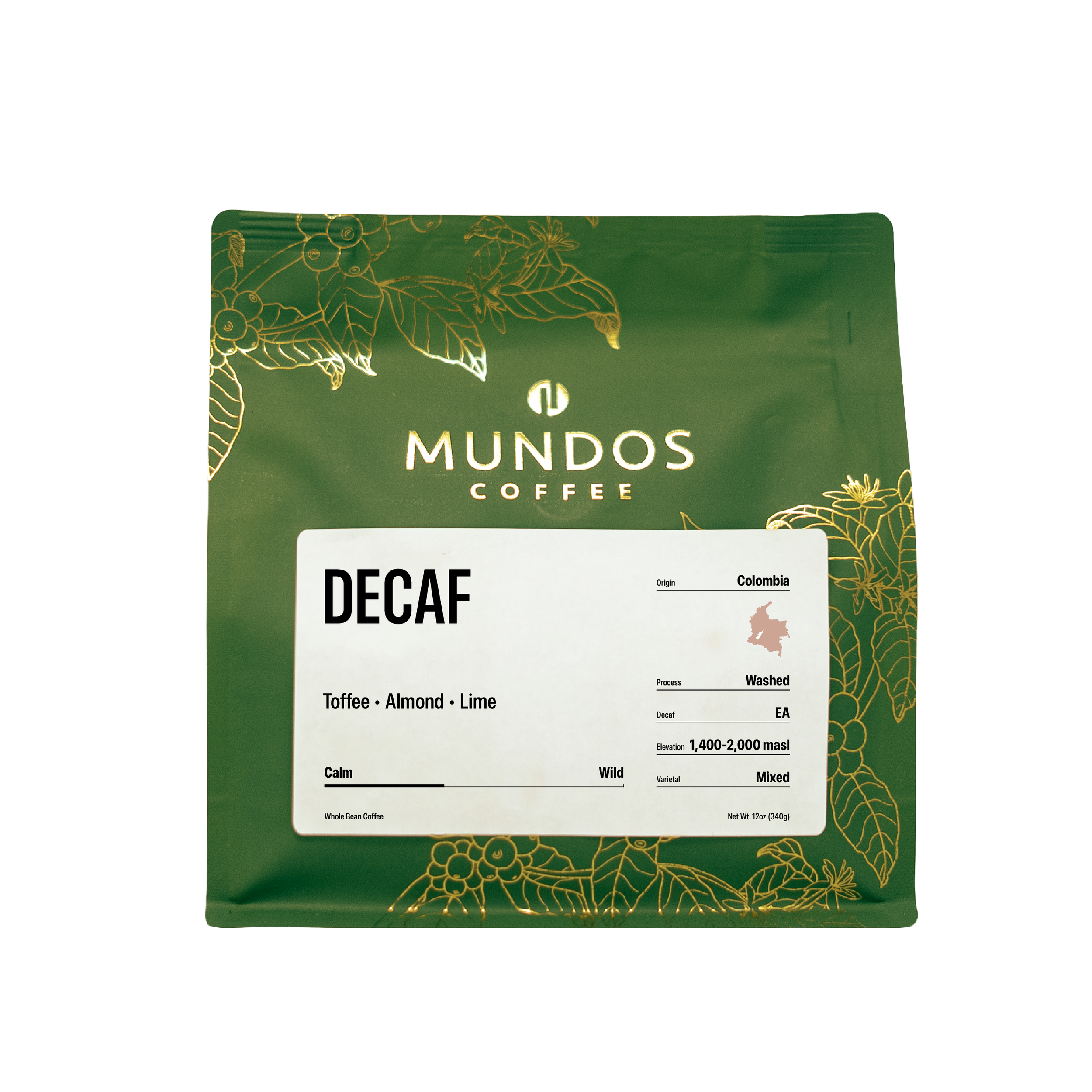
Decaffeinated Whole Bean Coffee
[DEE-CAF • KUH-LUM-BEE-YUH]
Process: Washed
Toffee, Almond, Lime
Ethyl acetate is an occurring ester (present in bananas and also as a by-product of fermented sugars) that is used as a solvent to bond with and remove caffeine from green coffee.
Just because it doesn't have caffeine doesn't mean it can't be fun. This Colombia coffee offers smooth notes of toffee and lime-candy sweetness.
Ethyl acetate is an occurring ester (present in bananas and also as a by-product of fermented sugars) that is used as a solvent to bond with and remove caffeine from green coffee. First, the coffee is sorted and steamed for 30 minutes under low pressure in order to open the coffee seeds’ pores and prepare them for decaffeination. The coffee is placed in a solution of both water and ethyl acetate, where the E.A. will begin to bond with the salts of chlorogenic acids inside the seeds. The tank will be drained and re-filled over the course of eight hours until caffeine is no longer detected. The seeds are steamed once more to remove the ethyl acetate traces. The coffee is then dried and polished for export.
HIGHLAND COLLECTION
Whole Bean Coffee
[KUH-LUM-BEE-YUH • HEEL-DAR-DOH • PER-DOH-MOH • ROD-REE-GEZ]
Process: Washed
Mango, Pomegranate, Citrus
Finca La Providencia, managed by Gildardo Perdomo Rodríguez, is located in Acevedo, Huila, Colombia, a region celebrated for its exceptional coffee production. The farm is situated at an elevation of approximately 1,650 meters above sea level, providing an ideal environment for cultivating high-quality coffee. The farm primarily grows the Gesha and Pink Bourbon varieties, both renowned for their unique and complex flavor profile. The coffee undergoes meticulous washed processing, ensuring clarity and brightness in the cup. Gildardo's dedication to quality and sustainable farming practices has established Finca La Providencia as a notable producer in the Huila region. His commitment to excellence contributes significantly to the rich diversity of Colombian specialty coffee.